Mitosis Coloring Worksheet: Cell Division Stages Color Guide
For educators and parents seeking effective biology teaching tools, the mitosis coloring worksheet stands out as a highly practical resource. This simple yet powerful activity transforms abstract cellular processes into a tangible, visual experience. By assigning specific colors to different stages or structures, students engage in active learning rather than passive observation. This hands-on approach cements the sequence of mitosis—prophase, metaphase, anaphase, and telophase—into long-term memory. The act of coloring itself encourages focus and helps reduce the cognitive load associated with memorizing complex diagrams. Ultimately, this method bridges the gap between textbook knowledge and real-world understanding.
Why Visual Aids Are Essential for Cell Biology
Cell biology is inherently microscopic, making it difficult for students to grasp without visual reinforcement. A mitosis coloring worksheet addresses this challenge by providing a static representation of a dynamic process. Chromosomes condensing, the nuclear envelope breaking down, and spindle fibers forming are events students cannot witness directly. Color-coding these events allows the mind to categorize and recall information efficiently. Visual learners, in particular, benefit from associating distinct phases with specific hues, creating mental anchors for the material. This strategy aligns with educational best practices that emphasize multimodal learning for complex subjects.
Breaking Down the Stages with Color
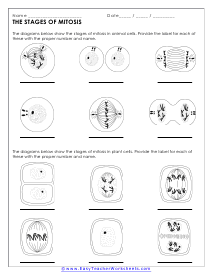
A standard mitosis coloring worksheet is meticulously designed to isolate each phase of division. Usually, students are given a diagram of a cell in various stages and a key indicating which color corresponds to which structure or phase. For instance, they might use blue to highlight chromosomes during prophase, red for the aligned metaphase plate, green for the separating chromatids of anaphase, and yellow for the reformed nuclei in telophase. This structured approach prevents confusion and ensures that students identify every critical component. It turns a chaotic division process into a clear, step-by-step instructional guide.


Educational Benefits Beyond Coloring
While the primary goal of a mitosis coloring worksheet is to reinforce knowledge, the benefits extend into skill development. The precision required to stay within the lines fosters fine motor skills and hand-eye coordination. Furthermore, following the instructions of a color key builds analytical thinking and the ability to follow sequential directions. Students are not just coloring; they are interpreting data and applying it correctly. This transforms the worksheet from a simple pastime into a comprehensive exercise in scientific literacy and discipline.
Comparative Learning and Assessment
In a classroom setting, these worksheets serve as excellent tools for comparative discussion. Once completed, students can compare their colored diagrams with peers, facilitating collaborative learning and peer teaching. The variation in color choices often sparks healthy debates about structure identification, deepening collective understanding. For instructors, the completed worksheets provide immediate, visual feedback on student comprehension. Gaps in knowledge—such as confusing telophase with anaphase—become evident at a glance, allowing for targeted review and clarification where it is needed most.


Integrating the Worksheet into a Lesson Plan
To maximize the effectiveness of a mitosis coloring worksheet, it should be positioned within a broader instructional context. Teachers might introduce the topic with a dynamic video or a lecture, followed by the worksheet as a guided practice activity. This ensures that students have the foundational vocabulary and context required to label the diagrams accurately. When used as a culminating activity, the worksheet acts as a study aid, helping students review for tests in a tactile way. The versatility of this resource makes it a staple for middle school and high biology curricula alike.
Digital vs. Printable Formats
Modern educators have the flexibility to deliver this activity in various formats. Printable worksheets remain popular for their ease of use and lack of technological requirement. Conversely, digital versions completed on tablets or laptops offer instant saving and no need for physical storage. Interactive digital worksheets can even include self-checking features where colors change if placed correctly. Regardless of the format, the core objective remains the same: to provide an interactive method for students to master the challenging concept of cell division.


Related Articles
Meiosis Coloring Worksheet: Colorful Cell Division Stages
For educators designing a comprehensive lesson plan on genetics, a meiosis coloring worksheet serves as an exceptionally effective pedagogical instrument. This...
Mitosis Coloring Worksheet Answer Key: Free Cell Division Practice
For educators and students navigating the complexities of cell biology, a mitosis coloring worksheet serves as an invaluable tactile tool. These diagrams...
Mitosis Coloring Worksheet PDF: Cell Division Fun
For educators and parents seeking effective resources to teach the fundamentals of cell biology, a mitosis coloring worksheet PDF offers a uniquely engaging...

Mitosis Activity Sheet: Cell Division Stages Labeled diagram
An activity sheet in mitosis cell division serves as a vital educational tool for visualizing the complex process where a single cell divides to form two...
Unit 6 Meiosis Coloring Worksheet: Unlock the Secrets of Cell Division
Navigating the complexities of advanced biology often requires specific tools to reinforce intricate cellular processes. For educators and students tackling...

Cell Cycle Coloring Worksheet Answer Key – Instant Download & Study Guide
For educators and students navigating the complexities of cellular biology, the cell cycle coloring worksheet serves as an invaluable visual tool. This...