Mitosis Coloring Worksheet PDF: Cell Division Fun
For educators and parents seeking effective resources to teach the fundamentals of cell biology, a mitosis coloring worksheet PDF offers a uniquely engaging solution. This specific format transforms a complex biological process into a visual and interactive learning experience, allowing students to grasp the distinct stages of cellular division through color. By associating specific phases with particular colors, learners can better retain the intricate sequence of events that occur during mitosis, from prophase to cytokinesis.
Why Visual Learning Enhances Retention of Complex Concepts
The human brain processes visual information significantly faster than text alone, making diagrams an essential tool in science education. A mitosis coloring worksheet PDF leverages this cognitive strength by providing a static diagram that students actively annotate. This act of coloring requires students to identify and differentiate between specific structures, such as chromosomes, spindle fibers, and the nuclear envelope. Instead of passively reading about cell division, the student becomes an active participant, which cements the spatial relationships and chronological order of the stages in long-term memory.
Breaking Down the Stages with Color
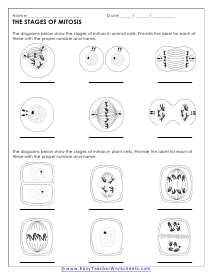
A standard worksheet typically features a series of unlabeled diagrams representing the sequential phases of mitosis. The PDF format is ideal for this purpose because it allows for clean, crisp lines that are easy to color, regardless of the printing quality. Students are usually instructed to use specific colors for distinct cellular components—for example, using one color for the condensed chromosomes and another for the spindle apparatus. This method helps deconstruct the seemingly chaotic process of division into manageable, colorful segments, making it less intimidating for middle school or high school biology students.


Accessibility and Convenience of the PDF Format
One of the primary advantages of a worksheet in PDF format is its accessibility. Teachers can download a high-quality version and print it instantly for an entire class, ensuring every student has the exact same visual reference. Parents homeschooling their children can easily integrate these pages into their lesson plans without the need for specialized software or editing tools. Furthermore, because the file is digital, it can be stored, shared, and reprinted indefinitely, making it a sustainable resource for classrooms or tutoring sessions.
Supplementary Educational Value
Beyond the act of coloring, these worksheets often include supplementary elements that enhance their educational value. Many PDFs feature a sidebar with a brief description of each phase, or include questions that prompt critical thinking. Students might be asked to label the structures they have just colored or to predict what happens if the cell cycle is disrupted. This combination of activity and inquiry transforms the worksheet from a simple time-filler into a comprehensive learning module that aligns with curriculum standards.


Integrating the Worksheet into a Larger Lesson Plan
To maximize the effectiveness of a mitosis coloring worksheet PDF, it should be positioned as a component of a broader instructional strategy. Prior to coloring, introducing the vocabulary and watching a short video can provide the necessary context. After the students complete the visual mapping, facilitating a class discussion to review the colors and sequences reinforces the lesson. The worksheet serves as the bridge between theoretical knowledge and tangible understanding, allowing the educator to assess individual comprehension at a glance.
Where to Find Quality Resources
High-quality mitosis coloring worksheet PDFs are readily available through a variety of reputable channels. Educational websites maintained by universities, science teachers, and curriculum developers often offer these resources for free or as part of a subscription service. When selecting a worksheet, look for clear imagery and accurate biological representations. Avoid overly simplistic or cartoonish versions if the goal is to prepare students for advanced placement exams or detailed coursework, as accuracy is paramount in scientific illustration.


Related Articles
Mitosis Coloring Worksheet Answer Key: Free Cell Division Practice
For educators and students navigating the complexities of cell biology, a mitosis coloring worksheet serves as an invaluable tactile tool. These diagrams...
Mitosis Coloring Worksheet: Cell Division Stages Color Guide
For educators and parents seeking effective biology teaching tools, the mitosis coloring worksheet stands out as a highly practical resource. This simple yet...
Unit 6 Meiosis Coloring Worksheet: Unlock the Secrets of Cell Division
Navigating the complexities of advanced biology often requires specific tools to reinforce intricate cellular processes. For educators and students tackling...
Meiosis Coloring Worksheet: Colorful Cell Division Stages
For educators designing a comprehensive lesson plan on genetics, a meiosis coloring worksheet serves as an exceptionally effective pedagogical instrument. This...
Meiosis Coloring Worksheet Answer Key: Free Cell Division Answers
For educators and students navigating the complexities of cell biology, a meiosis coloring worksheet serves as an invaluable tool for visualizing the intricate...

Mitosis Activity Sheet: Cell Division Stages Labeled diagram
An activity sheet in mitosis cell division serves as a vital educational tool for visualizing the complex process where a single cell divides to form two...