Unit 6 Meiosis Coloring Worksheet: Unlock the Secrets of Cell Division
Navigating the complexities of advanced biology often requires specific tools to reinforce intricate cellular processes. For educators and students tackling the demanding curriculum of Unit 6, the Meiosis Coloring Worksheet stands out as an essential resource for visualizing genetic division. This particular worksheet targets the core outcomes of meiosis, transforming abstract stages like prophase I and anaphase II into a tactile, color-coded exercise. By associating specific phases with distinct colors, learners can better retain the sequence and chromosomal events that define sexual reproduction. This approach not only aids memory but also demystifies the reductional division that creates haploid gametes.
Decoding the Mechanics: What the Worksheet Illustrates
The primary objective of the Unit 6 Outcome Meiosis Coloring Worksheet is to map the journey of a cell from diploid to haploid. Students are typically instructed to color structures such as homologous chromosomes, spindle fibers, and the resulting daughter cells. One section might require differentiating between maternal and paternal chromosomes during synapsis, while another focuses on the separation of sister chromatids. This visual breakdown ensures that students can identify key structures like the centromere and kinetochore, which are critical for the physical movement of DNA. The worksheet effectively bridges the gap between theoretical diagrams in a textbook and the dynamic reality of cell division.
The Stages of Division Colorized
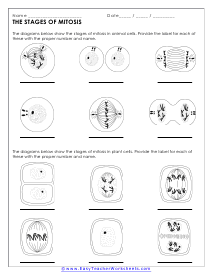
Meiosis is divided into two distinct phases, Meiosis I and Meiosis II, and the worksheet meticulously guides the learner through both. In the column for Meiosis I, students color the pairing of tetrads and the crossing over that introduces genetic variation. They shade the regions where homologous chromosomes separate, moving toward opposite poles. Conversely, the column for Meiosis II mirrors the process of mitosis, where the sister chromatids finally split. This side-by-side comparison is invaluable for understanding how meiosis reduces the chromosome number by half while generating four unique cells, a stark contrast to the two identical cells produced by mitosis.


Educational Benefits and Cognitive Reinforcement
Beyond simple memorization, this coloring activity engages multiple learning modalities simultaneously. The kinesthetic act of holding a crayon or marker reinforces motor skills, while the visual selection of colors activates spatial reasoning. When a student carefully shades a homologous pair with the same hue, they are actively comparing and contrasting the chromosomes, solidifying the concept of diploidy. Furthermore, the act of waiting for the "Anaphase" instruction before moving the colors helps to sequence the events mentally, building a chronological understanding of the process that is often tested in standardized assessments.
Utilizing the Answer Key for Mastery
To maximize the effectiveness of the worksheet, the integration of a Unit 6 Outcome Meiosis Coloring Worksheet Answer Key is crucial. The key allows for immediate self-correction, enabling learners to identify mistakes in chromosome pairing or phase sequencing right away. Rather than simply checking a box, the key serves as a diagnostic tool. If a student colored a tetrad with varying colors, the answer key provides the visual confirmation needed to correct the misunderstanding about homologous pairing. This immediate feedback loop is essential for moving information from short-term to long-term memory.


Applying the Knowledge: Genetics and Variation
Once the coloring is complete, the worksheet transitions from a mechanical exercise to a foundation for genetic probability. Students can use their color-coded diagram to predict the potential combinations of alleles in the resulting gametes. By tracing the path of a specific colored chromosome from the parent cell to the final products, learners can physically see how independent assortment and random fertilization contribute to genetic diversity. This makes the worksheet a springboard for more complex discussions on Punnett squares and pedigree analysis, ensuring that the outcome of meiosis is not just a drawing, but a functional concept.
Tips for Implementation in the Classroom
To get the most out of this resource, consider implementing the worksheet at different stages of your unit. Initially, use it as a guided practice tool where the instructor walks through each phase step-by-step, pausing to ensure correct coloring. Later, assign it as independent homework to assess individual comprehension. Encourage students to label their diagrams thoroughly after coloring, integrating vocabulary directly onto the page. This multi-step approach ensures that the worksheet serves not just as an activity, but as a core component of the lesson plan that aligns with specific educational outcome standards.


Related Articles
Meiosis Coloring Worksheet: Colorful Cell Division Stages
For educators designing a comprehensive lesson plan on genetics, a meiosis coloring worksheet serves as an exceptionally effective pedagogical instrument. This...
Meiosis Coloring Worksheet Answer Key: Free Cell Division Answers
For educators and students navigating the complexities of cell biology, a meiosis coloring worksheet serves as an invaluable tool for visualizing the intricate...
Mitosis Coloring Worksheet Answer Key: Free Cell Division Practice
For educators and students navigating the complexities of cell biology, a mitosis coloring worksheet serves as an invaluable tactile tool. These diagrams...
Mitosis Coloring Worksheet PDF: Cell Division Fun
For educators and parents seeking effective resources to teach the fundamentals of cell biology, a mitosis coloring worksheet PDF offers a uniquely engaging...

Master Color Addition and Subtraction Worksheet Physics – Unlock Light Spectrum Secrets
Understanding color addition and subtraction is fundamental to grasping how we perceive light and color in our physical world, forming the bedrock for physics...

Hidden Pictures Coloring Book: Unlock & Color the Secrets
The hidden pictures coloring book has evolved from a simple pastime into a sophisticated tool for mindfulness and creative expression. Far removed from the...