Meiosis Coloring Worksheet: Colorful Cell Division Stages
For educators designing a comprehensive lesson plan on genetics, a meiosis coloring worksheet serves as an exceptionally effective pedagogical instrument. This specific educational tool transforms an abstract biological process into a tangible, visually engaging exercise, allowing students to map the intricate journey of chromosomes. By assigning distinct colors to homologous pairs, spindle fibers, and emerging daughter cells, learners can physically trace the stages of meiosis I and meiosis II. Such active participation moves beyond passive reading, fostering a deeper spatial and conceptual understanding of how genetic diversity is generated at the cellular level.
The Biological Significance of Meiosis
Before diving into the mechanics of the worksheet, it is essential to establish the "why" behind meiosis. Unlike mitosis, which produces identical somatic cells for growth and repair, meiosis is the specialized cell division responsible for sexual reproduction. Its primary mission is to reduce the chromosome number by half, creating haploid gametes—sperm and egg cells. This reduction is crucial for maintaining species-specific chromosome counts across generations; when two gametes fuse during fertilization, the resulting zygote restores the full diploid number. A well-constructed meiosis coloring worksheet highlights this reductional division, emphasizing the separation of homologous chromosomes.
Decoding the Stages with Color
The true power of a coloring worksheet lies in its structured breakdown of the meiotic phases. Students are typically instructed to color specific structures as they progress through prophase I, metaphase I, anaphase I, and telophase I, followed by the second division. For instance, one might use blue to trace the path of crossing over during prophase I, where homologous chromosomes exchange genetic material. Another color could denote the alignment of tetrads at the metaphase plate in metaphase I, a random orientation that directly fuels genetic variation. This chromatic mapping converts complex terminology into a memorable, visual sequence.


Focusing on Crossing Over
One of the most critical events depicted in a quality meiosis coloring worksheet is crossing over, which occurs exclusively in meiosis I. This process involves the physical swapping of DNA segments between non-sister chromatids of a homologous pair. In the visual framework of the worksheet, students can shade the chiasmata—the X-shaped points of exchange—differently to illustrate this genetic recombination. By doing so, they grasp how meiosis generates chromosomes that are a unique mosaic of maternal and paternal genes, a fundamental driver of evolutionary adaptability and individual genetic identity.
Addressing Common Misconceptions
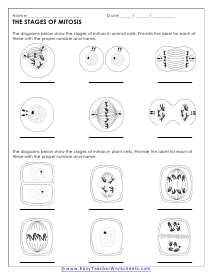
Inevitably, students confuse meiosis with mitosis, particularly regarding the number of divisions and the genetic outcome of the resulting cells. A thoughtfully designed worksheet preempts this by including comparative elements. For example, it might prompt students to color a side-by-side comparison of a cell undergoing mitosis versus meiosis, highlighting the duplicated chromosomes in the former and the tetrad formation in the latter. Clarifying that meiosis produces four non-identical daughter cells, while mitosis produces two identical ones, solidifies a core conceptual distinction.


Utilizing the Worksheet for Assessment
Beyond its value as a learning aid, a meiosis coloring worksheet functions as a low-stakes, formative assessment tool. As instructors circulate the classroom, they can quickly gauge student comprehension by observing whether chromosomes are being colored according to their directional movement or pairing status. An educator might ask a student to explain why the color representing maternal chromosomes is found in a specific gamete, prompting the student to articulate the law of independent assortment. This immediate feedback loop allows for on-the-fly clarification and reinforces correct visual-spatial modeling.
Integrating Technology and Extension Activities
To augment the traditional worksheet, educators can integrate digital resources. Virtual simulations of meiosis can be used beforehand to provide a dynamic preview, while the coloring sheet serves as a kinesthetic reinforcement afterward. For advanced learners, the worksheet can be extended to include prompts about disorders resulting from nondisjunction, such as Down syndrome. Students can be asked to shade the extra chromosome in a trisomic cell, visually connecting the coloring exercise to real-world medical genetics and the importance of precise chromosomal segregation.


Related Articles
Unit 6 Meiosis Coloring Worksheet: Unlock the Secrets of Cell Division
Navigating the complexities of advanced biology often requires specific tools to reinforce intricate cellular processes. For educators and students tackling...
Meiosis Coloring Worksheet Answer Key: Free Cell Division Answers
For educators and students navigating the complexities of cell biology, a meiosis coloring worksheet serves as an invaluable tool for visualizing the intricate...
Mitosis Coloring Worksheet: Cell Division Stages Color Guide
For educators and parents seeking effective biology teaching tools, the mitosis coloring worksheet stands out as a highly practical resource. This simple yet...

Colorful Animal Cell Worksheet: Label & Learn!
Engaging with a coloring animal cell worksheet provides students with a dynamic and memorable approach to grasping complex biological concepts. This tactile...

Mitosis Coloring Worksheet Answer Key: Free Cell Division Practice
For educators and students navigating the complexities of cell biology, a mitosis coloring worksheet serves as an invaluable tactile tool. These diagrams...
Mitosis Coloring Worksheet PDF: Cell Division Fun
For educators and parents seeking effective resources to teach the fundamentals of cell biology, a mitosis coloring worksheet PDF offers a uniquely engaging...