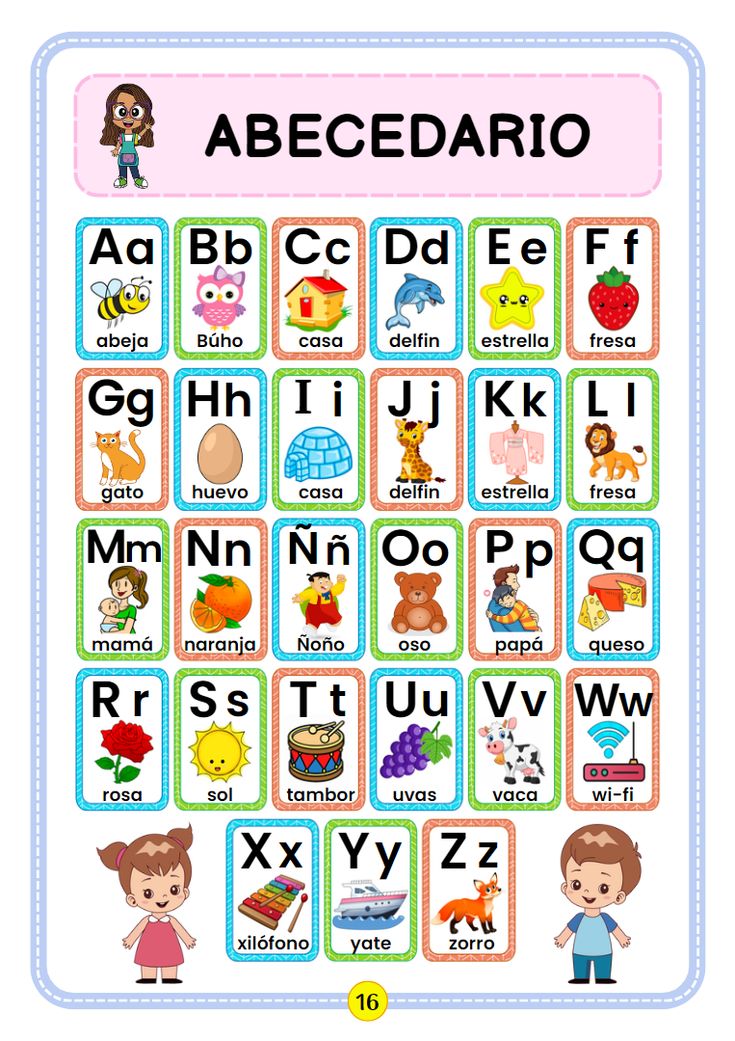
Aprende el Alfabeto en Español con Imágenes 📚🎨
Learning the alphabet in Spanish is the essential first step for anyone beginning their journey with the language. While the foundation appears familiar, featuring the same 26 letters found in English, the nuances of pronunciation and phonetics create a distinct sonic identity. Mastering this foundational system opens the door to clear communication, correct spelling, and a deeper appreciation for the flow of Spanish speech.
The Standard Spanish Alphabet and Pronunciation
At its core, the Spanish alphabet consists of 27 letters, including the distinctive letter Ñ. Unlike English, Spanish is largely a phonetic language, meaning words are generally pronounced exactly as they are written. This consistency is a significant advantage for learners, as it removes the guesswork associated with irregular English spellings. Focusing on the correct mouth position and tongue placement is key to replicating the crisp, clear sounds that define the language.
Key Pronunciation Differences to Master
- The letter V is pronounced like a soft B, creating the gentle "bee" sound in all contexts.
- LL historically produced a "y" sound, though in many regions it has evolved into a "j" sound, similar to the "y" in "yes."
- Ñ is a unique letter representing a palatal nasal sound, best described as the "ni" in "canyon," requiring the tongue to press against the roof of the mouth.
- Every vowel maintains a consistent sound: A is "ah," E is "eh," I is "ee," O is "oh," and U is "oo."
The Essential Letter Ñ
The letter Ñ is a cornerstone of the Spanish alphabet, representing a distinct sound that does not exist in the English language. It is not a stylistic flourish or a variant of N; rather, it is a separate letter that appears after N in the alphabet. This character dramatically changes the meaning of words, making its correct usage vital for everything from reading menus to signing official documents.


Visual Recognition and Memory Aids
To aid memory, imagine the Ñ as an N tilde, sitting proudly above its sibling. Visual cues are incredibly helpful when learning the specific keyboard commands for typing this letter. On a US keyboard, you typically press Ctrl + ~ (tilde) followed by n. Seeing the letter in the context of common words like España (Spain) or niño (child) reinforces its presence and solidifies its unique identity within the writing system.
| English Cognate | Spanish Word with Ñ | English Translation |
|---|---|---|
| Sign | Señal | Signal |
| Morning | Mañana | Tomorrow / Good morning |
| Canyon | Cañón | Cannon |
Digraphs and Pronunciation Combinations
Beyond individual letters, Spanish utilizes specific combinations of letters, known as digraphs, to represent singular sounds. These pairings are predictable and follow strict rules, making them straightforward to learn. The most common are ch and ll, although their status as separate letters in the official alphabet has changed over time. Understanding these combinations is essential for accurate reading and prevents mispronunciation of fundamental vocabulary.


Rules for Digraph Usage
- Ch is treated as a separate letter and is always pronounced as a "ch" sound, as in "cheese" or the Scottish "loch."
- Ll is traditionally considered a double L, and while its pronunciation varies by region, it rarely sounds like the English "y" in "yes" in formal linguistic training.
- Gu is used before the vowels E and I to create a hard "g" sound, as in "guitar," preventing the "g" from sounding like an "h."
Distinguishing Soft and Hard Consonants
A critical element of Spanish phonetics involves the interaction between vowels and consonants, specifically the letters C, G, and sometimes Q. These consonants behave differently depending on the vowel that follows them. Recognizing whether a consonant should be hard or soft is fundamental to mastering the language's rhythm and ensuring that words are understood correctly by native speakers.
Consonant Rules for Clarity
- The letter C sounds like a hard "k" before the consonants A, O, and U (e.g., casa, color).
- Before the vowels E and I, the letter C transforms into a soft "s" sound (e.g., cena, ciudad).
- Similarly, the letter G is hard, sounding like a "g" in "gate," before the consonants A, O, and U (e.g., gato, gusto).
- Before E or I, the letter G becomes soft, sounding like the "h" in "hotel" (e.g., gente, girasol).


Related Articles
Aprende el Alfabeto en Español con Imágenes: Guía Visual para Niños
Learning the alphabet with pictures in Spanish offers a foundational gateway to fluency, transforming abstract symbols into tangible objects and ideas. This...
Aprende el Alfabeto Español: Imprimibles de Letras para Niños
Mastering the Spanish alphabet is the essential first step for anyone eager to learn the language, and utilizing alphabet letters in Spanish printables offers...
Hojas de Trabajo del Alfabeto en Español: Aprende y Practica con Diversión
Mastering the Spanish alphabet is the essential first step for anyone beginning their journey to fluency, and a dedicated alphabet worksheet in Spanish...

Aprende el Alfabeto y los Números en Español: Guía Rápida y Fácil
Understanding alphabet numbers in Spanish opens a window into the foundational structure of the language, particularly for learners tackling initial...
Aprende el Alfabeto en Español: Guía Completa de las Letras Hispanas
While the foundation of written Spanish appears familiar to English speakers, the alphabet letters in Spanish carry distinct nuances that are essential for...

Aprende el Alfabeto con Tracing en Español – Guía Interactiva para Niños
Mastering the Spanish alphabet is the essential first step for anyone embarking on the journey of Spanish literacy. Before learners can form words or construct...