The Cell Cycle Coloring Worksheet: A Colorful Guide to Cell Division
For educators striving to make complex biological processes tangible, the cell cycle coloring worksheet stands out as an indispensable resource. This specific tool transforms an abstract sequence of molecular events into a vibrant, hands-on activity, allowing students to visually map the intricate journey of a cell. By assigning distinct colors to different phases, learners move beyond passive reading and engage in active synthesis, reinforcing spatial and conceptual understanding. The simple act of coloring provides a multi-sensory anchor, making the division of the nucleus and cytoplasm feel less like memorization and more like a logical, observable process.
The Educational Rationale Behind Chromosomal Visualization
The primary value of the cell cycle coloring worksheet lies in its ability to decode complexity through visual simplicity. Textbooks often present the stages—interphase, mitosis, and cytokinesis—as concise labels, but these phases encompass a flurry of microscopic activity. A well-designed worksheet assigns a color to each major stage: one for the growth and DNA replication of interphase, another for the distinct phases of nuclear division (prophase, metaphase, anaphase, telophase), and a final one for cytoplasmic division. This color-coding system acts as a cognitive bridge, helping students differentiate between the preparatory, dividing, and splitting stages. It supports various learning styles, particularly for visual and kinesthetic learners, by providing a tactile method to internalize a dynamic sequence that is otherwise difficult to picture.
Deconstructing the Stages: From Interphase to Cytokinesis
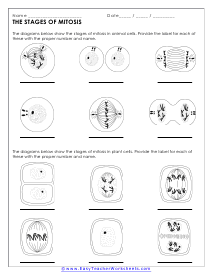
A standard cell cycle coloring worksheet provides a black-and-line diagram of a cell, often in a simplified cross-section, waiting for the learner’s input. The instructions typically guide students through a specific order, ensuring they follow the natural progression of events. The journey usually begins in interphase, where the cell is depicted as growing and preparing for division; this phase is often broken down into sub-stages like G1, S (where chromosomes are duplicated), and G2. The worksheet then guides the student through the dramatic events of mitosis—condensing chromosomes, aligning them at the equator, pulling them apart—and concludes with cytokinesis, where the cell physically splits. By manually tracing this journey with color, students reinforce the chronological order and functional significance of each step, solidifying a mental map of the process.


Beyond Coloring: Critical Thinking and Application
While the act of coloring is engaging, the most effective cell cycle coloring worksheet prompts students to analyze rather than simply fill in shapes. Advanced versions include questions that require interpretation, such as identifying cells in various stages of the cycle from a series of microscopic images or calculating the time a cell spends in a particular phase based on a sample population. Some worksheets might ask students to label the duplicated chromosomes or identify structures like the spindle fibers that are active during division. This integration of labeling and short-answer components transforms the worksheet from a simple art project into a comprehensive assessment tool that checks for both factual knowledge and conceptual application.
Linking the Diagram to Real-World Contexts
Understanding the cell cycle is not merely an academic exercise; it is fundamental to comprehending health, disease, and regeneration. A robust cell cycle coloring worksheet often includes a section that connects the abstract diagram to real-world implications. For instance, educators can highlight how disruptions in the cycle lead to cancer, where cells bypass normal checkpoints and divide uncontrollably. Conversely, the worksheet can also explain how certain chemotherapy drugs target rapidly dividing cells by interfering with specific phases of the cycle. By adding this layer of context, the worksheet helps students see the model not as an isolated diagram, but as a key to understanding significant biological and medical phenomena.


Utilizing the Worksheet in Diverse Learning Environments
The versatility of the cell cycle coloring worksheet makes it a favorite across different educational settings. In a traditional high school biology class, it serves as an excellent guided note-taking tool during a lecture, keeping students actively engaged. For remote or hybrid learners, a digital version can be shared via learning management platforms, allowing them to color using virtual tools or print the worksheet to work by hand. In higher education, the worksheet can be adapted for more advanced topics, such as the cell cycle regulation involving cyclins and CDKs, where specific proteins involved in each phase are labeled. This adaptability ensures the resource remains relevant whether the classroom is physical or virtual.
Maximizing Retention with Answer Keys and Discussion
To ensure the activity achieves its educational goals, providing a clear and accurate answer key is essential. A well-structured answer key not only shows the correct color scheme but can also include brief explanations for why a particular structure is shaded a certain way. Following the completion of the worksheet, a class discussion is invaluable. Instructors can引导学生 (guide students) to compare their colored diagrams, debate nuances in interpretation, and connect the visual model back to the textual descriptions of the phases. This collaborative review cements the learning, turning a solitary coloring exercise into a memorable and dialogic experience that clarifies any lingering misconceptions.


Related Articles

Meiosis Coloring Worksheet: Colorful Cell Division Stages
For educators designing a comprehensive lesson plan on genetics, a meiosis coloring worksheet serves as an exceptionally effective pedagogical instrument. This...
Cell Cycle Coloring Worksheet Answer Key – Instant Download & Study Guide
For educators and students navigating the complexities of cellular biology, the cell cycle coloring worksheet serves as an invaluable visual tool. This...
Unit 6 Meiosis Coloring Worksheet: Unlock the Secrets of Cell Division
Navigating the complexities of advanced biology often requires specific tools to reinforce intricate cellular processes. For educators and students tackling...
Cell Cycle Coloring Worksheet: Fun Science Activity For Students
For educators seeking effective tools to teach complex biological processes, the cell cycle coloring worksheet stands out as a valuable resource. This...

Colorful Animal Cell Worksheet: Label & Learn!
Engaging with a coloring animal cell worksheet provides students with a dynamic and memorable approach to grasping complex biological concepts. This tactile...
Meiosis Coloring Worksheet Answer Key: Free Cell Division Answers
For educators and students navigating the complexities of cell biology, a meiosis coloring worksheet serves as an invaluable tool for visualizing the intricate...