Mastering the Russian Alphabet: A Step-by-Step Tracing Guide for Beginners
Tracing the Russian alphabet offers a fascinating window into the evolution of written language, revealing how political ambition, religious conversion, and cultural exchange can reshape a civilization’s most fundamental tools of communication. This script, known as Cyrillic, is not merely a random collection of strange symbols to the untrained eye, but a logical system with a history that stretches back over a millennium. For learners, historians, or linguists, understanding the origins and structure of these characters transforms the act of reading from a mechanical task into an intellectual journey. By examining the lineage of each letter, we uncover the profound influence of Greek scholarship and the innovative spirit of medieval scribes who adapted it to capture the specific sounds of Slavic tongues.
Historical Genesis: From Saints to Symbols
The story of the Russian alphabet begins not in the courts of the Tsars, but in the quiet monasteries of the First Bulgarian Empire. Saints Cyril and Methodius, tasked with converting the Slavic peoples to Christianity in the 9th century, realized that the liturgical Latin alphabet was inadequate for the phonetic nuances of Old Church Slavonic. Their solution was to invent a new script, drawing primarily from the cursive style of Greek uncial letters. While the older Glagolitic script was the initial attempt, the Cyrillic alphabet—named in honor of Saint Cyril—proved more durable and efficient. As Kievan Rus’ adopted Christianity, this script traveled north, becoming the vessel for codifying the language of Rus and laying the very foundation of Russian written identity centuries before the modern state emerged.
Key Borrowings and Adaptations
Examining the characters reveals a clear lineage. For instance, the letter "А" (A) is visually and phonetically identical to its Greek counterpart, representing the open back unrounded vowel. Similarly, "М" (M) and "Т" (T) are direct descendants, maintaining their familiar forms. However, the genius of the script lies in the modifications made to accommodate Slavic sounds. The letter "Ж" (Zh), resembling a hybrid of "3" and "И," was created to represent the s sound found in the French "rouge" or the "s" in "measure". Another example is "Щ" (Shch), a ligature that combines "Ш" (Sh) and "Ч" (Ch), demonstrating the complex phonological reality of the language that couldn't be captured by imported symbols alone.


Orthographic Evolution: The 1918 Revolution
The appearance of the Russian alphabet did not solidify until the Bolshevik reforms of 1918, a period of radical change that sought to modernize and streamline the language for the Soviet masses. Prior to this decree, the script included "ѣ" (yat) and "і" (dotted i), archaic letters that represented nuances of pronunciation that had merged in spoken Russian. The Soviet authorities, driven by a desire for efficiency and literacy, eliminated these redundant characters. This "reform" was not merely cosmetic; it was a deliberate act of linguistic engineering. By reducing the number of letters and standardizing spelling, the state made the alphabet more logical and accessible, a tool for mass education and propaganda that reflected the new political order.
Navigating the Modern Alphabet
Today’s Russian alphabet consists of 33 letters, a balance of inherited Greek forms, Cyrillic inventions, and later additions. It is a mix of familiar and foreign elements, where the Latin-loving reader might recognize "О" (O), "К" (K), and "С" (S), while others, like "Д" (D) which looks like a triangle and "Р" (R) which represents the "R" sound, require adjustment. The script is fundamentally phonetic, meaning words are generally written as they are spoken, a feature that simplifies the learning process compared to English. This structural logic allows learners to decode the language with relative precision once the visual shapes are memorized, making the system remarkably effective for its intended purpose.


Cultural Codex: More Than Just Writing
To trace the Russian alphabet is to trace the trajectory of Russian history itself. The script survived the tumult of revolution, the strictures of the Soviet era, and the challenges of the digital age. It adapted from quill to printing press to keyboard, yet retained its core identity. The aesthetic of the letters—whether the elegant curves of "Г" (G) or the stark geometry of "Л" (L)—carries a cultural weight that transcends linguistics. In a globalized world where English often dominates, the preservation and use of Cyrillic remain a powerful symbol of national sovereignty and cultural distinctiveness, connecting millions of speakers to a shared past.
Decoding the Script: A Practical Guide
For those embarking on the journey of learning Russian, approaching the alphabet as a system of building blocks is the most effective strategy. Rather than rote memorization, focus on the phonetic relationships and the logic behind the shapes. Start by identifying the familiar Latin look-alikes to build confidence, then tackle the unique characters one by one. Understanding the history of a letter like "В" (V), which actually represents the "V" sound, dispels the confusion it causes for English speakers who expect it to be a "B". Utilizing comparative tables that juxtapose the printed, cursive, and typed forms accelerates recognition and reinforces the interconnected nature of the script.
Comparative Reference Table
A structured overview is essential for grasping the visual and phonetic landscape of the Russian alphabet.


| Uppercase (Print) | Lowercase (Print) | Approximate Sound | Latin Equivalent |
|---|---|---|---|
| А | а | a (ah) | A |
| Б | б | b | B |
| В | в | v | V |
| Г | г | g or h | G |
| Д | д | d | D |
| Е | е | ye | Ye |
| Ё | ё | yo | Yo |
| Ж | ж | zh | Zh |
| З | з | z | Z |
| И | и | ee | I |
| К | к | k | K |
| Л | л | l | L |
| М | м | m | M |
| Н | н | n | N |
| О | о | o | O |
| П | п | p | P |
| Р | р | r | R |
| С | с | s | S |
| Т | т | t | T |
| У | у | u | U |
| Ф | ф | f | F |
| Х | х | kh | Kh |
| Ц | ц | ts | Ts |
| Ч | ч | ch | Ch |
| Ш | ш | sh | Sh |
| Щ | щ | shch | Shch |
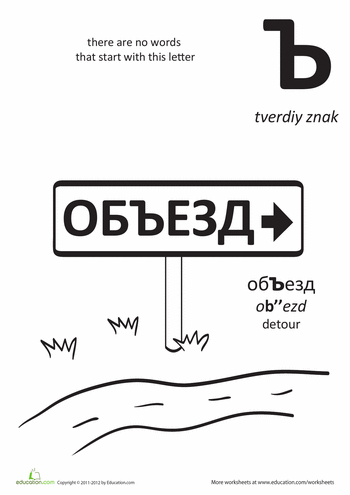
| Ъ | ъ | hard sign | " |
| Ы | ы | y | Y |
| Ь | ь | soft sign | ' |
| Э | э | e | E |
| Ю | ю | yu | Yu |
| Я | я | ya | Ya |
Utilize this table as a foundation for your studies, focusing on the sounds that are entirely new to your auditory perception. Mastering these building blocks will unlock the ability to read newspapers, literature, and official documents, transforming a complex script into a powerful tool for connection and understanding.




Related Articles

Master Japanese Alphabet Tracing: Ultimate Guide for Beginners
Mastering the Japanese alphabet tracing is often the first tangible step for anyone embarking on the journey of learning Nihongo. This foundational practice...

The Ultimate Guide to Tracing Number A to Z: Mastering the Alphabet Path
Tracing number a to z is often one of the first structured exercises a child encounters in early education. This fundamental activity bridges the gap between...

Easy Tracing Drawing Simple: Fun Step-by-Step Guide for Beginners
Tracing drawing simple shapes and objects is often perceived as a beginner’s exercise, yet it is a foundational practice that holds immense value for artists...

Mastering the Letter G: A Fun Tracing Alphabet G Guide for Kids
Tracing alphabet g is often the first structured lesson in written communication, a foundational exercise that bridges the gap between abstract symbols and...
Master the Russian Alphabet: Free Tracing Sheets for Beginners
Mastering the foundational elements of any language begins with the written form, and for those embarking on the journey of Russian, the first essential step...

Learn Russian Alphabet Letters Fast — Complete Guide for Beginners
The Russian alphabet, a cornerstone of East Slavic communication, presents a fascinating blend of historical evolution and practical utility. Known as...