Master the Russian Alphabet: Free Tracing Sheets for Beginners
Mastering the foundational elements of any language begins with the written form, and for those embarking on the journey of Russian, the first essential step is understanding the script. A Russian alphabet tracing sheet serves as the indispensable bridge between the familiar Latin-based structures of other languages and the elegant, complex world of Cyrillic. This tool transforms the abstract shapes of letters into a hands-on exercise, allowing learners to build muscle memory and confidence before attempting freehand writing.
The Structure of the Cyrillic Script
The Russian alphabet, or "а́збука" (azbuka), is not a random collection of symbols but a systematic and logical phonetic system. Comprising 33 letters, it is a blend of characters derived from the Greek alphabet, with distinct additions to represent sounds unique to the Russian language. Unlike the Latin alphabet, which often uses letter names that correspond closely to their pronunciation, Cyrillic letters are primarily valued for the specific sounds, or "фонемы," they produce. A comprehensive Russian alphabet tracing sheet will accurately depict these 33 characters, ensuring learners become intimately familiar with each one's unique form from the very beginning.
Benefits of Tracing for Muscle Memory
The primary advantage of using a tracing sheet lies in its ability to develop procedural memory. Learning to write Russian involves mastering a series of distinct strokes, from the gentle curves of letters like "к" (ka) and "м" (em) to the precise angles of "т" (te) and the sometimes-intimidating "Щ" (shcha). By repeatedly tracing the guided paths, learners engage in deliberate practice, which reinforces the correct stroke order and direction. This method significantly reduces the initial cognitive load, allowing the hand to follow the path until the movements become automatic, leading to smoother, more confident handwriting over time.


Key Letters and Their Nuances
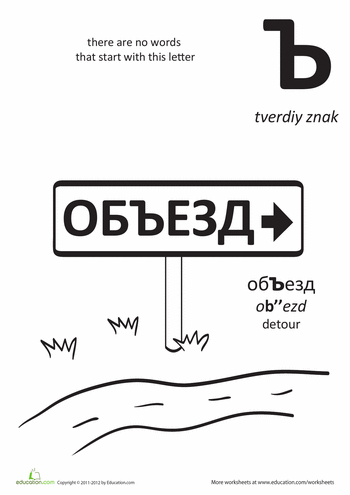
Not all Cyrillic letters are created equal, and a high-quality Russian alphabet tracing sheet will highlight critical distinctions that are easy to confuse for English speakers. For instance, the similarity between "В" (ve) and "У" (oo) can be a common pitfall; tracing helps cement that "В" has two distinct downward strokes, while "У" is a single, flowing curve. Similarly, the difference between "О" (o) and "0" (the number zero) is purely stylistic in print, but the former is a letter that must be learned through practice. Other frequent challenges include the palatalized signs indicated by soft signs ("ь") and hard signs ("ъ"), which alter the pronunciation of preceding letters without having a vowel sound of their own.
Practical Applications and Usage
Beyond the classroom, a well-designed tracing sheet is a versatile tool for independent study. Visual learners benefit from the spatial awareness it provides, helping them understand the proportions and alignment of letters within the line. It serves as an excellent warm-up exercise before moving to unlined practice paper, effectively bridging the gap between guided instruction and free writing. Furthermore, it is a valuable resource for self-correction; by comparing their traced version with the model, students can immediately identify and correct issues with stroke direction or shape, fostering a sense of self-reliance in their learning process.


Choosing the Right Resource
When selecting a Russian alphabet tracing sheet, quality and accuracy are paramount. An effective worksheet should feature clear, bold outlines of the printed (прописные) and cursive (связные) forms of the letters. It is crucial to ensure that the stroke order numbers are correct and follow the standard writing conventions of the Russian language. Look for resources that include all 33 letters, including the less frequently used but essential palatalization signs. The ideal sheet will also provide ample space for repetition, encouraging the dedicated practice necessary to move from tracing to true, unaided mastery.
From Tracing to Fluent Writing
The ultimate goal of any tracing exercise is to render the guide unnecessary. As proficiency with the Russian alphabet tracing sheet increases, learners should gradually transition to dotted lines and then to simple guidelines, such as dashed mid-lines and baseline markers. This progression builds the spatial confidence needed to form letters of consistent size and alignment. The disciplined practice honed through tracing directly translates to improved reading fluency, as the brain's visual recognition centers become attuned to the unique shapes and connections inherent in the Cyrillic script, creating a more holistic language skill set.




Related Articles

Master Beautiful Handwriting: Free Calligraphy Alphabet Tracing Sheets for Beginners
For anyone embarking on the journey of beautiful handwriting, calligraphy alphabet tracing sheets serve as the foundational training ground. These meticulously...
Russian Alphabet Tracing Sheet PDF: Free Printable练习 Sheets
Mastering the foundational elements of the Russian language begins with the shapes of its characters, and a russian alphabet tracing sheet pdf serves as the...
Master the Russian Alphabet: Free Printable Worksheets for Beginners
Embarking on the journey of learning Russian begins with mastering its foundational element: the Cyrillic script. For many English speakers, the sight of...

Master Japanese Alphabet Tracing: Ultimate Guide for Beginners
Mastering the Japanese alphabet tracing is often the first tangible step for anyone embarking on the journey of learning Nihongo. This foundational practice...

Cursive Alphabet Printables: Free Tracing Worksheets & Practice Sheets
For educators, parents, and lifelong learners seeking to master the foundational elements of written language, cursive alphabet printables represent an...

Free Printable Alphabet Practice Sheets for Kids - Tracing & Writing Practice
Mastering the fundamentals of written language begins with the humble alphabet, and there is no more effective way to build that foundation than with practice...