Hexagon Shape Worksheets for Kindergarten: Fun Geometry Activities
Hexagon shape worksheets for kindergarten represent a foundational tool in early childhood geometry education. These specific resources introduce young learners to a six-sided polygon, moving beyond the basic circle, square, and triangle. By engaging with these exercises, children develop spatial reasoning, visual discrimination, and an essential vocabulary for describing the world around them. The structured practice provided by these worksheets helps solidify the abstract concept of a hexagon into a recognizable and drawable shape.
Why Introduce Hexagons in Kindergarten?
While seemingly simple, identifying a hexagon requires a level of abstract thought that is crucial for cognitive development. This shape appears frequently in the natural and human-made world, from honeycombs and snowflakes to stop signs and certain tiles. Early exposure helps children build a mental library of geometric forms, which supports later learning in mathematics, art, and science. Kindergarten is the perfect window for this introduction, as students are highly receptive to visual and hands-on learning experiences.
Key Learning Objectives
Effective hexagon shape worksheets target specific educational goals that extend beyond mere identification. They are designed to foster a multi-sensory understanding of geometry in young children. The primary objectives typically include:


- Accurate identification of the hexagon among other shapes.
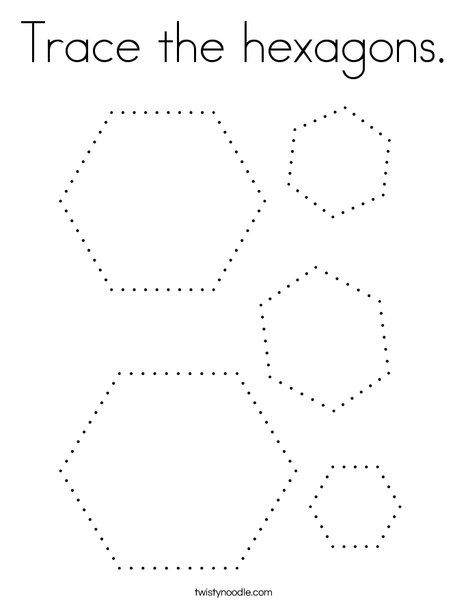
- Ability to trace and draw the shape independently.
- Recognition of the hexagon in various orientations and sizes.
- Understanding that the shape has six equal sides and six corners.
Practical Applications and Activities
Modern kindergarten hexagon worksheets move far beyond simple fill-in-the-blank diagrams. They incorporate a variety of engaging formats that cater to different learning styles. These activities make abstract geometry tangible and fun for children, ensuring that screen time is often minimal and focused. The goal is to make the learning process feel like a game rather than a chore.
Types of Exercises Found on Worksheets
To ensure comprehensive understanding, educators utilize a diverse range of exercise types. These formats challenge the child to interact with the shape in different ways, reinforcing the concept from multiple angles. A well-designed worksheet will often include a combination of the following activities:


| Activity Type | Description | Skill Developed |
|---|---|---|
| Identification & Coloring | Circling or coloring specific hexagons in a field of mixed shapes. | Recognition and Discrimination |
| Tracing | Following dotted lines to practice forming the shape. | Motor Skills and Muscle Memory |
| Drawing | Attempting to draw the shape freehand from memory. | Memory and Reproduction |
| Real-World Matching | Connecting the shape to a picture of a honeycomb or a nut. | Contextual Understanding |
Integrating Worksheets into the Curriculum
For maximum effectiveness, hexagon worksheets should be part of a broader, interactive learning environment. They work best when combined with physical manipulatives and real-world observation. This blended approach ensures that children connect the abstract image on the page with the tactile and visual reality of the shape.
Teachers and parents can enhance the worksheet experience by incorporating supplementary materials. Providing wooden hexagon blocks for building, or taking the class on a "shape hunt" to find the polygon in the classroom, creates a dynamic learning loop. The worksheet serves as a record of this exploration, allowing the child to reflect on and solidify their new knowledge.
Benefits for Cognitive Development
Beyond shape recognition, these worksheets offer significant benefits for overall cognitive growth. The act of tracing and drawing helps refine pencil grip and hand-eye coordination, which are precursors to proficient writing. Furthermore, the process of matching and sorting shapes锻炼s critical problem-solving skills and attention to detail.


By successfully navigating these exercises, children build confidence in their ability to learn complex concepts. This early achievement in geometry provides a strong scaffold for future math education, making the transition to more complex topics like patterns, fractions, and spatial geometry much smoother. The foundational skills learned here are permanent assets in a child's educational journey.




Related Articles
Hexagon Shape Worksheets: Fun Geometry Activities for Kids
Hexagon shape worksheets represent a foundational tool in early childhood education and elementary mathematics, offering a structured pathway for young...

Fun Shape Worksheets for Grade 3 – Geometry Practice Activities
Third grade marks a pivotal shift in a young mathematician’s journey, where abstract symbols begin to transform into tangible understanding. Shape worksheets...

Kindergarten 3D Shapes Worksheets: Fun Geometry Activities
Kindergarten 3d shapes worksheets represent a foundational element in early childhood mathematics education, serving as the crucial bridge between abstract...

Shape Review Worksheets for Kindergarten: Fun Geometry Practice
Shape review worksheets for kindergarten represent a foundational pillar in early childhood mathematics education. These carefully designed resources move...

Shape Man Kindergarten Worksheets: Fun Tracing Activities
Shape man for kindergarten worksheets represent a foundational educational tool designed to introduce young learners to basic geometric concepts through...

Grade 2 Shape Worksheets: Fun Geometry Activities for Kids
Grade 2 shape worksheets represent a critical bridge between basic preschool geometry and the more complex mathematical concepts encountered in later...