Master Arabic Handwriting: Free Printable Worksheets For Beginners
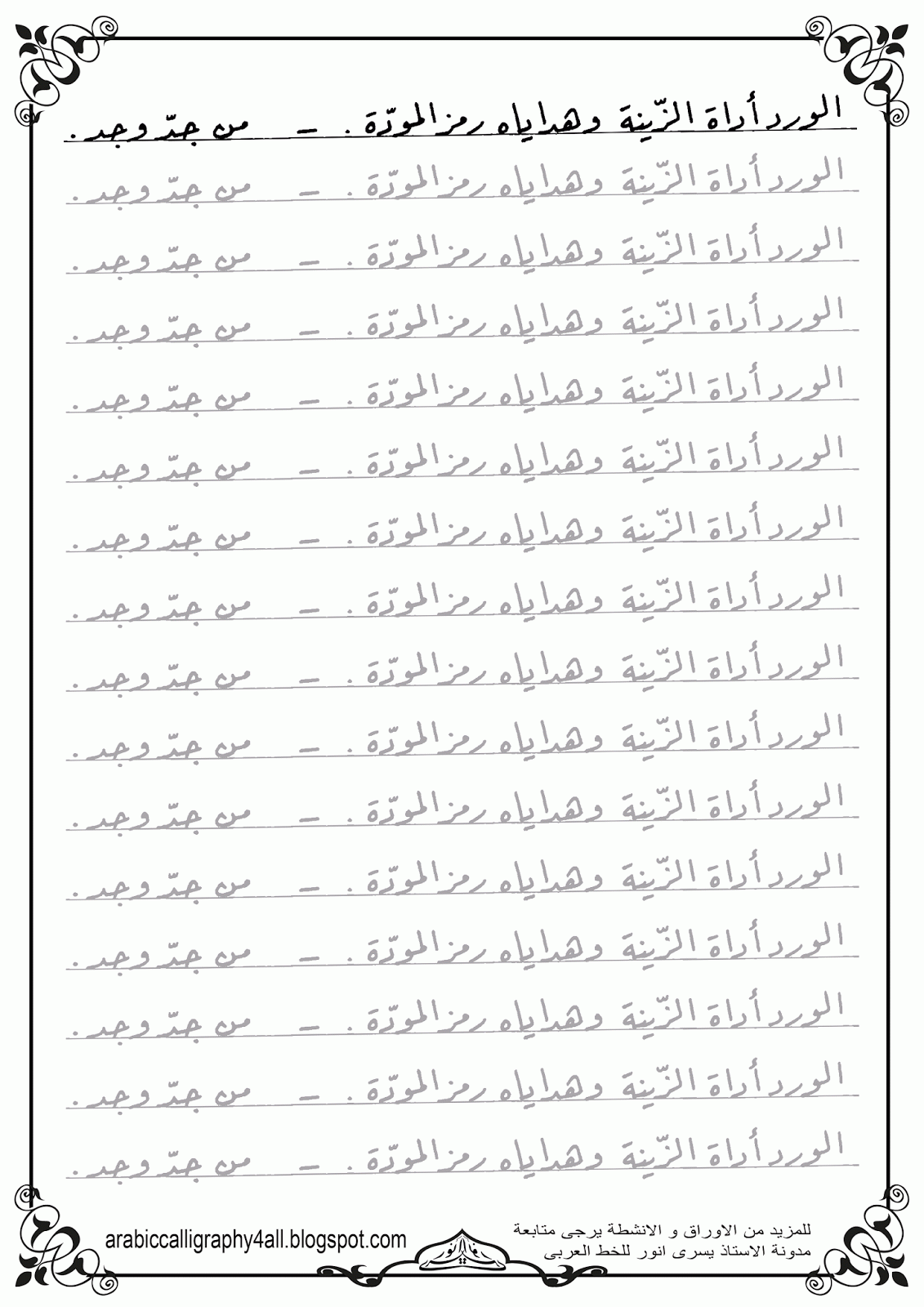
Mastering the fluid elegance of Arabic script begins with the foundational step of controlled writing. For learners of all ages, Arabic handwriting worksheets provide the structured practice necessary to bridge the gap between theoretical knowledge of letters and the confident, artistic ability to form them on the page. These specialized tools are designed to guide the hand through the correct stroke order, ensuring that every curve, loop, and connecting line adheres to the linguistic standards of the language.
The Structure and Design of Effective Worksheets
Not all practice materials are created equal, and the effectiveness of an Arabic handwriting worksheet is determined by its pedagogical structure. High-quality worksheets move beyond simple letter repetition by incorporating a logical progression that aligns with how the Arabic script is actually used. They typically start with isolated letters, move to letter combinations, and finally introduce words and short phrases, allowing the muscle memory to develop incrementally. The visual design is crucial; grids and dotted lines serve as a scaffold, helping learners maintain consistent letter size and proper positioning relative to the baseline.
Isolation, Initial, Medial, and Final Forms
A fundamental challenge of the Arabic alphabet is that most letters change shape depending on their position in a word. A truly effective worksheet addresses this complexity by dedicating sections to the four distinct forms: isolated, initial, medial, and final. By practicing a letter like "ن" (noon) in all its contexts, students internalize the deformation rules that make connected script possible. This systematic approach prevents the common mistake of writing isolated forms when attempting to create flowing text, a hurdle that stalls the progress of many new learners.


The Cognitive Benefits of Handwritten Practice
In an era dominated by keyboard typing, the act of writing by hand might seem antiquated, but it offers unique cognitive advantages that digital tools cannot replicate. The physical engagement required to trace and copy characters creates stronger neural pathways in the brain compared to passive visual recognition. This deep processing is essential for moving new information from short-term memory into long-term retention. Consequently, using Arabic handwriting worksheets transforms learning from a passive observation of shapes into an active motor skill that solidifies linguistic understanding.
Developing Muscle Memory and Proper Strokes
Consistency is the hallmark of beautiful Arabic calligraphy, and achieving it relies entirely on muscle memory. Worksheets are the drill sergeant for this muscle development, enforcing the correct direction and sequence of every stroke. Practicing the specific "harakat" (vowel markings) and "lam-alif" ligatures repeatedly ensures that the hand learns the rhythm of the language. This repetitive practice eradicates hesitation and produces writing that is not only legible but also exhibits a natural flow, where letters connect seamlessly without conscious effort.


Supplementary Learning and Cultural Connection
Beyond the technical aspects of penmanship, these worksheets serve as a vital link to the culture and aesthetics of the Arabic-speaking world. Many modern worksheets integrate common Arabic phrases, greetings, or Quranic verses, allowing learners to connect their handwriting practice with meaningful content. This integration adds a layer of motivational depth, as students feel they are not just copying lines but rather engaging with the language in a authentic and respectful manner, appreciating the artistic heritage of the script.
Structured Drills for All Proficiency Levels
Whether you are a complete beginner or an advanced student looking to refine your style, there is a worksheet format suited to your needs. Beginners benefit from worksheets with large grids and prominent arrows, focusing on basic letter forms. Intermediate learners can utilize worksheets that focus on cursive connections and spelling. Advanced users might seek out worksheets with minimal guidance, allowing them to practice the fluidity and artistic variations found in professional calligraphy. This scalability ensures that the learning journey remains challenging and effective at every stage.




Related Articles

Master Telugu Tracing Letters: Free Printable Worksheets for Beginners
Mastering the Telugu script is the foundational step toward fluency in one of India’s most melodious and ancient languages. For learners, especially children...

Master Handwriting Strokes: Free Printable Worksheets for Perfect Letter Formation
Handwriting strokes worksheets serve as the foundational building blocks for developing fluid, legible, and confident writing skills in young learners. These...

Master Urdu Handwriting: Free Printable Worksheets for Kids
Mastering the graceful flow of Urdu script begins with deliberate practice, and structured Urdu handwriting worksheets provide the essential framework for this...

Master the Russian Alphabet: Free Printable Worksheets for Beginners
Embarking on the journey of learning Russian begins with mastering its foundational element: the Cyrillic script. For many English speakers, the sight of...
Master Arabic Tracing Alphabet: Free Printable Worksheets for Kids
Mastering the Arabic script begins with the fundamental act of tracing. For language learners, educators, and calligraphy enthusiasts alike, the arabic tracing...

Free Printable Arabic Handwriting Worksheets for Adults (PDF & English)
For adults looking to refine their script, free printable Arabic handwriting worksheets adults PDF English have become an invaluable resource. These documents...