Trace & Solve: Fun Mazes Worksheets for Kids
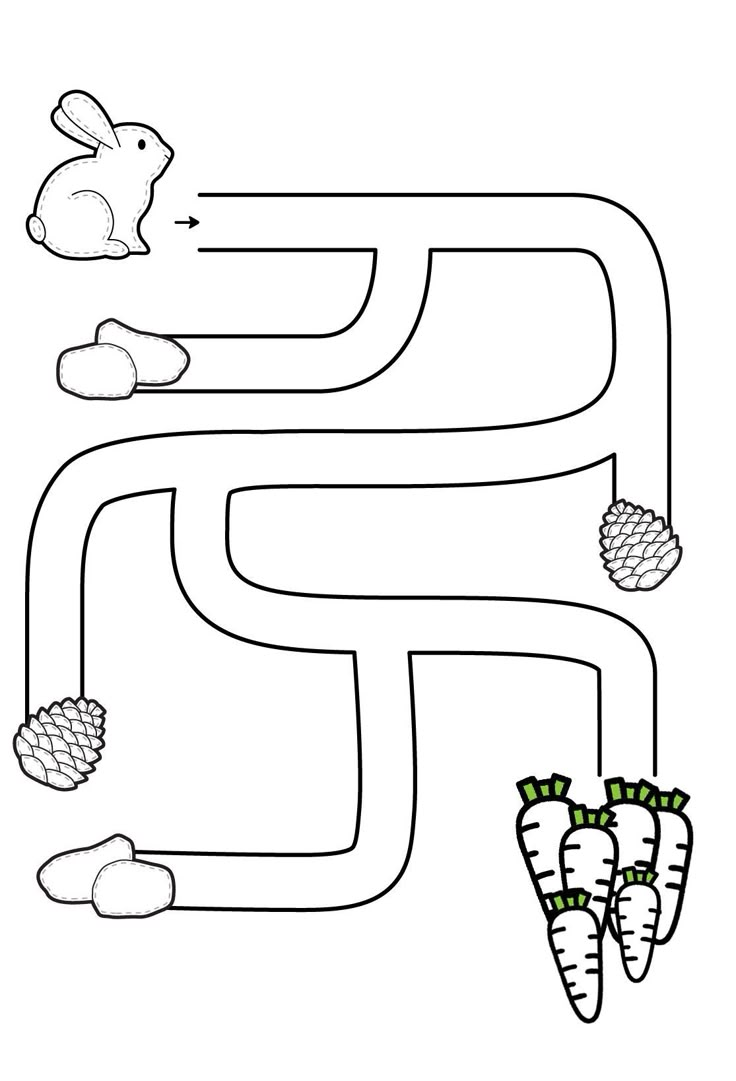
Tracing mazes worksheets represent a fundamental yet powerful tool in early childhood education, bridging the gap between playful activity and essential skill development. These structured exercises guide a pencil along a predetermined path, requiring the child to follow a line from a starting point to a finish. The simplicity of the concept belies the complex neurological and motor coordination involved in successfully navigating the twists and turns. By engaging with these pages, children unknowingly build the foundational abilities necessary for fluent writing and precise hand-eye coordination.
Developmental Benefits of Mazes
The primary value of tracing mazes lies in their targeted developmental benefits, specifically in the realm of fine motor skills. Holding a pencil correctly and applying consistent pressure is a learned behavior that strengthens the small muscles in the hand and fingers. This controlled manipulation is crucial for future tasks such as buttoning shirts, using utensils, and, most importantly, forming letters and numbers. Furthermore, mazes demand significant concentration and problem-solving; the child must plan a path, adjust for errors, and persist through challenges, fostering cognitive resilience and patience.
Pre-Writing and Pencil Control
Before a child can form distinct letters, they must master the basic mechanics of pencil control. Tracing lines, curves, and angles within a maze framework provides a safe and structured environment for this practice. The act of keeping the line within the borders prevents stray marks and builds accuracy. This focused activity helps develop the "pincer grasp" and the ability to move the pencil in specific directions, which are the building blocks for cursive and manuscript writing. Worksheets often progress from simple straight lines to intricate loops, ensuring a gradual and effective skill-building process.


Integrating Mazes into Learning
For educators and parents, tracing mazes worksheets offer a versatile resource that integrates seamlessly into various learning contexts. They are particularly effective during quiet seat work, providing a calming activity that keeps children engaged while reinforcing specific skills. To maximize their impact, these worksheets should be part of a balanced literacy and numeracy program rather than the sole focus of instruction. Pairing maze completion with verbal instructions or storytelling can enhance comprehension and make the activity more immersive for young learners.
Thematic and Engaging Designs
Modern tracing mazes have evolved far beyond the simple geometric paths of the past. Contemporary worksheets often feature thematic designs that capture a child's imagination, turning practice into play. Mazes might follow the path of a hungry snake chasing letters, guide a lost astronaut back to their ship, or help a butterfly navigate a garden. These narratives transform a repetitive task into an exciting adventure, increasing motivation and ensuring that children remain focused and eager to complete the exercise.


Cognitive and Spatial Reasoning
Beyond physical dexterity, mazes are excellent for developing visual-spatial reasoning. Children must scan the entire page, recognizing patterns and anticipating what comes next. They learn to distinguish between relevant paths and distracting dead ends, a skill that translates directly to reading comprehension and mathematical problem-solving. The process of mentally mapping the route before moving the pencil strengthens planning and foresight, encouraging a methodical approach to challenges that serves them well in academic settings.
Progression and Mastery
Effective use of tracing mazes involves a clear progression of difficulty to match the child's growing abilities. Worksheets are typically categorized by complexity, starting with wide paths and minimal turns for beginners and advancing to narrow paths with sharp angles and multiple directional changes for more advanced learners. Observing a child move from needing guidance to completing complex mazes independently provides a tangible measure of their developing confidence and competence. This structured advancement ensures that the activity remains challenging yet achievable, maintaining a positive learning experience.


Related Articles

Trace & Learn: Fun Tracing Worksheets Numbers for Kids
Tracing worksheets numbers provide a foundational tool for early childhood education, bridging the gap between abstract numerical concepts and physical...

Trace & Play: Fun Tracing Worksheets for Kids
Tracing fun worksheets have become an essential tool in early childhood education, offering a structured yet enjoyable way for young learners to develop...

Trace the Alphabet: A to Z Tracing Worksheets for Kids
Mastering the foundational building blocks of written language begins with the simplest unit of text, and for the Latin alphabet, that is the letter A to Z...

Trace and Write Numbers 1-10 Worksheets: Free Printable Practice for Kids
Mastering the fundamentals of mathematics begins with understanding quantity and symbol association, a skill honed through consistent practice with tracing and...
Trace & Learn: Fun Tracing Shape Worksheets for Kids
Tracing shape worksheets represent a foundational component of early childhood education, serving as a critical bridge between abstract symbols and physical...

ABC Trace Letters Printable: Fun Tracing Worksheets for Kids
Mastering the fundamentals of written communication begins with the building blocks of language, and for young learners, that journey starts with the alphabet...