Small Letter Z Tracing Worksheets: Free Printables for Kids
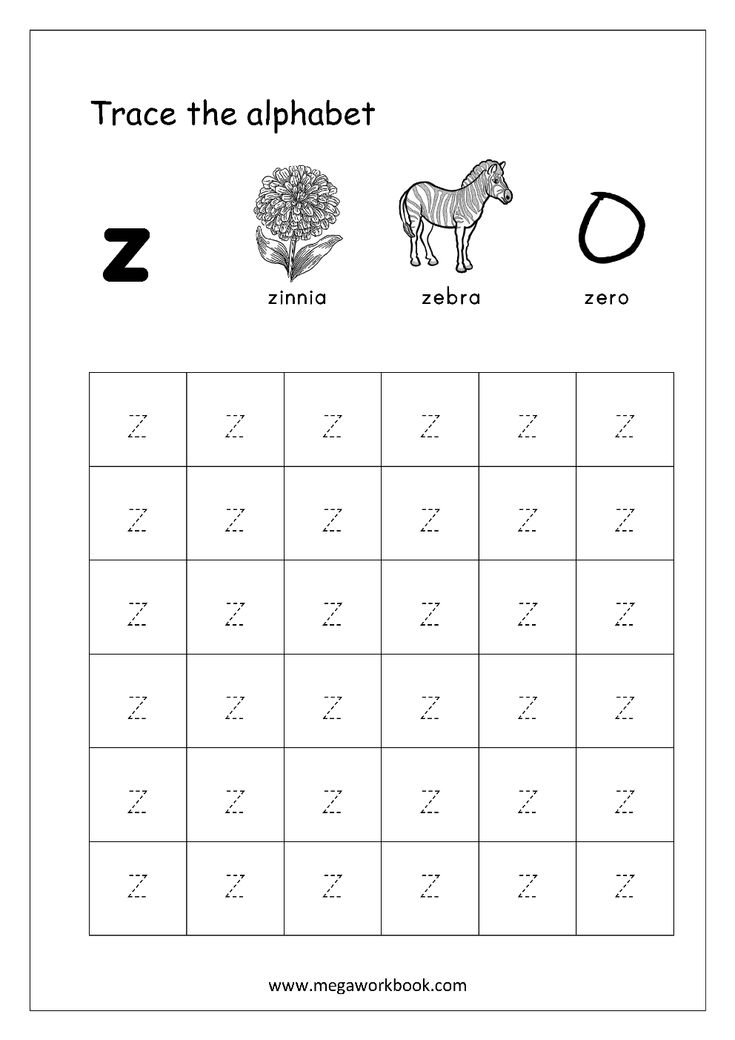
Mastering the intricacies of handwriting often begins with the fundamentals, and one of the most critical elements is understanding the specific formation of cursive letters. For educators and parents guiding young learners, small letter z tracing worksheets serve as an indispensable tool. The letter z, often the final point of reference in the alphabet, presents unique challenges with its distinctive diagonal stroke and looping structure, making focused practice essential for developing fluency.
The Importance of Targeted Letter Formation
Why does the letter z require specific attention in early literacy development? Unlike more straightforward characters, the lowercase z demands a precise sequence of movements: starting at the top, pulling down diagonally, and then returning to the baseline to form a clean loop. This complexity can lead to inconsistent sizing or incorrect stroke order without proper guidance. Small letter z tracing worksheets provide the structured repetition necessary to build muscle memory, ensuring that the correct pathway becomes second nature for the developing writer.
Structural Advantages for Young Learners
When children engage with these worksheets, they are not merely copying shapes; they are decoding the physical language of writing. The guided lines act as a visual scaffold, helping children understand the spatial relationships within the letter. This method reduces the cognitive load associated with freehand writing, allowing the student to focus entirely on the mechanics of formation. By repeatedly tracing the correct path, the neural connections responsible for motor skills are reinforced, leading to greater confidence and accuracy over time.


Variations and Design Considerations
Not all tracing materials are created equal, and the effectiveness of a worksheet depends heavily on its design. Educators should look for resources that offer a variety of formats to cater to different learning stages. A high-quality small letter z tracing worksheet will often include multiple tiers of difficulty, starting with simple directional arrows and progressing to dotted lines and finally to blank practice areas. This graduated approach ensures that learners are consistently challenged without becoming overwhelmed.
| Worksheet Type | Best For | Skill Level |
|---|---|---|
| Arrow-Guided Tracing | Introduction to stroke order | Beginner |
| Dotted Line Tracing | Refining motor control | Intermediate |
| Independent Writing | Assessment and mastery | Advanced |
Integrating Multi-Sensory Learning
Modern educational strategies emphasize multi-sensory engagement, and tracing worksheets can be adapted to fit this philosophy. While the child traces the letter z, they can simultaneously vocalize the sound /z/, creating a link between the visual, kinesthetic, and auditory pathways. Furthermore, educators can encourage the use of tactile surfaces, such as sandpaper letters or textured tracing cards, to provide an additional layer of sensory input. This holistic approach caters to diverse learning styles, making the acquisition of the letter z more inclusive and effective.


Practical Application and Classroom Management
Implementing these worksheets into a daily routine requires thoughtful integration to maximize their impact. Short, focused sessions of 10 to 15 minutes are often more effective than lengthy, infrequent drills. Teachers can utilize these worksheets during literacy centers or as a warm-up activity to prepare students for writing tasks. The key is consistency; regular exposure to structured tracing helps to solidify the correct formation before the child transitions to unlined paper, where the risk of reverting to improper habits increases.
Ultimately, the goal of using small letter z tracing worksheets extends beyond the mere execution of a single character. It is about instilling a sense of order and precision that applies to all of handwriting. By providing clear, repetitive, and engaging practice, educators and caregivers equip children with the foundational skills necessary for fluent communication. This targeted practice ensures that the student’s journey toward literacy is built on a solid and legible foundation.




Related Articles

Custom Letter Tracing Worksheets: Free Printables for Kids
For parents and educators navigating the early stages of literacy development, custom letter tracing worksheets serve as an indispensable bridge between...

Small Letter ABC Tracing Worksheets: Free Printables for Beginners
Mastering the foundational elements of written communication begins with the smallest components, and few tools are as effective for young learners as the...

Free Tracing Worksheet Printables for Kids – Pre-Writing Practice and Letter Formation
For educators and parents constantly seeking high-quality, no-cost educational tools, the search for a reliable tracing worksheet free resource is a common...

Heart Shape Tracing Worksheets: Free Printables for Kids
Heart shape tracing worksheets provide a foundational tool for developing fine motor skills and early handwriting proficiency. These simple yet effective...

Apple Alphabet Printables: Free Tracing Worksheets for Kids
Parents and educators seeking engaging early learning tools often turn to apple alphabet printables, a versatile resource for teaching letter recognition and...

Free Printable Letter Y Worksheets – Fun Activities for Kids
For parents and educators navigating the foundational stages of literacy, the letter Y often presents a unique challenge. Its distinct visual form, the way it...