Master the Russian Alphabet Trace: A Fun Guide to Perfect Cursive
Mastering the Russian alphabet trace is the essential first step for anyone serious about learning the Russian language. While the Cyrillic script may initially appear as an intimidating wall of unfamiliar symbols, understanding its structure transforms the process of learning Russian from a chore into a logical and achievable endeavor. This foundational layer dictates pronunciation, meaning, and grammatical function, making it far more than just a formality; it is the bedrock of effective communication. By dedicating time to properly trace and memorize these characters, learners unlock the door to a rich and vibrant linguistic world.
The Structure of the Cyrillic Script
The Russian alphabet trace is based on the Cyrillic script, which consists of 33 letters. Unlike the Latin alphabet, which is familiar to English speakers, these characters represent sounds that may not exist in other languages. The system is largely phonetic, meaning that words are generally written as they are spoken. This consistency is a significant advantage for learners, as it reduces the confusion between spelling and pronunciation. The letters are divided into vowels, consonants, and a small group of so-called soft signs and hard signs, which act as modifiers for the preceding consonant. Grasping this fundamental classification is crucial for successful tracing and memorization.
Recognizing Familiar Shapes
One of the most encouraging aspects of the russian alphabet trace is the presence of characters that look and sound identical to their Latin counterparts. These cognates provide a significant head start for beginners, creating a sense of familiarity and reducing the initial cognitive load. For example, the letters А, Е, К, М, О, Т, and Х are essentially the same as the English letters A, E, K, M, O, T, and X. By actively identifying these "look-alikes," learners can immediately reduce the perceived difficulty of the script and focus their energy on mastering the more unique characters.


The Importance of Proper Tracing Techniques
A russian alphabet trace is not merely about visual recognition; it is a kinesthetic process that reinforces muscle memory. When you trace a letter, you are training your hand to reproduce its form accurately and consistently. This physical act of writing solidifies the visual image in your memory far more effectively than passive reading alone. Furthermore, correct stroke order ensures that your handwriting remains legible and professional. Poor tracing habits can lead to confusion, such as mixing up letters like б (be) and в (ve) or р (er) and н (en), which are mirror images of one another. Focusing on the precise path of the pen from start to finish is therefore a critical component of the learning process.
| Russian Letter | Name (Transliteration) | Approximate Sound | Key Tracing Note |
|---|---|---|---|
| в | ve | v as in vote | Starts with a downward stroke, unlike its mirror, р. |
| р | er | r as in red | The second stroke descends; do not start at the top. |
| т | te | t as in top | The crossbar is placed through the upper half of the stem. |
| у | u | oo as in boot | Resembles a lowercase 'y' and requires a smooth, continuous motion. |
Differentiating Confusing Pairs
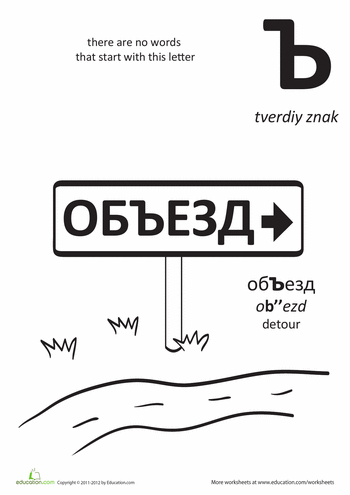
The physical similarity between certain letters is a common pitfall for learners, making the russian alphabet trace a critical exercise in attention to detail. The pair б / в (be / ve) differs only in the direction of the diagonal line, while п / н (pe / en) are inverted versions of each other. Similarly, the soft sign (ь) and hard sign (ъ) are easy to overlook but have a powerful impact on pronunciation. Treating these pairs as distinct shapes to be carefully traced, rather than similar scribbles, is essential for developing reading fluency. Slow, deliberate practice with these specific characters helps to engraver their unique forms into your muscle memory.


Beyond Memorization: Contextual Learning
While rote memorization has its place, the most effective russian alphabet trace practice occurs within the context of real words. Isolating a letter on a page is useful for understanding its form, but seeing it in action reveals its behavior. For instance, the letter 'е' is usually pronounced 'ye' when it appears at the beginning of a word (like еда - food) but is often reduced to a simple 'e' sound in the middle of a word (like тетрадь - notebook). Tracing letters within words allows you to observe these contextual shifts, transforming abstract symbols into functional components of the language. This approach bridges the gap between mechanical writing and actual reading comprehension.
Building Fluency and Speed
Proficiency in the russian alphabet trace is not achieved overnight; it is a skill developed through consistent, focused repetition. As you progress, the goal is to move from deliberate, careful strokes to a more fluid and rapid script. This transition signifies that the characters are no longer separate entities to be consciously analyzed, but rather familiar components that your brain processes automatically. This fluency is vital for note-taking, journaling, and filling out forms. The confidence gained from writing quickly and legibly encourages further engagement with the language, propelling you toward more advanced studies in grammar and conversation.




Related Articles
Master Russian Alphabet Print and Cursive: A Complete Visual Guide
Understanding the Russian alphabet in both print and cursive forms is essential for anyone serious about learning the Russian language. While the phonetic...

Master the Lowercase Q: Step-by-Step Guide to Perfect Cursive & Print Writing
Learning how to write a lowercase q correctly is a fundamental skill that impacts the clarity and professionalism of your writing. While often overshadowed by...

Master the Flow: Lowercase Alphabet Cursive Guide
Mastering the lowercase alphabet in cursive is the foundational step toward developing a fluent and expressive writing style. While often introduced alongside...

Master the Russian Lowercase Alphabet: A Complete Guide
The russian lowercase alphabet forms the foundational building blocks of the Cyrillic script, essential for writing the Russian language. While it shares a...
Master the Russian Alphabet: Uppercase and Lowercase Guide
Understanding the distinction between russian alphabet uppercase and lowercase letters is fundamental for anyone learning the language. While the core...
Master the Small Letter Russian Alphabet: A Complete Guide
The small letter Russian alphabet forms the foundational building block for written communication in the Russian language. While the script may appear complex...