Maze Coloring Pages for Kindergarten: Fun Brain Boosting Puzzles
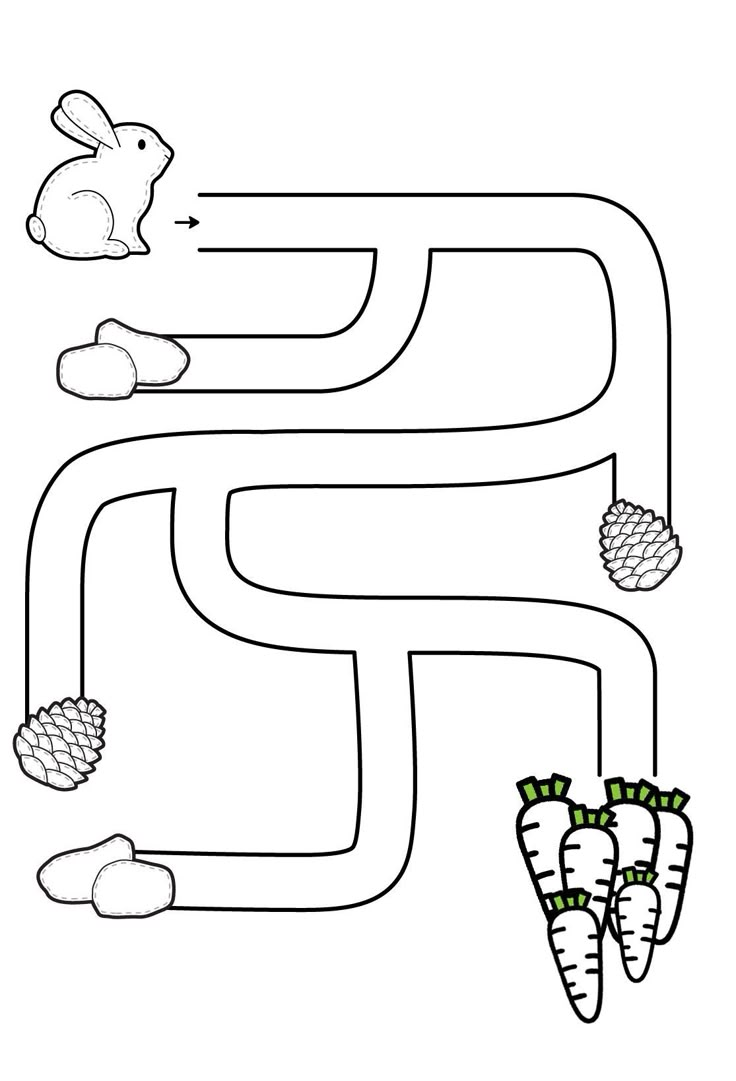
Maze coloring pages kindergarten represent a surprisingly powerful educational tool that merges the simple joy of coloring with the cognitive challenge of navigation. For young learners, these printable activities offer far more than a quiet moment of entertainment; they are a dynamic exercise in problem-solving and fine motor skill development. By guiding a crayon through a winding path to a destination, children practice spatial reasoning and hand-eye coordination without even realizing they are in a classroom. This blend of creativity and logic makes them an invaluable resource for parents and educators looking to support early childhood development in a fun, low-pressure way.
Why Maze Activities Are Essential for Kindergarten Readiness
Kindergarten readiness extends beyond knowing the alphabet and counting to include a set of foundational skills that ensure a smooth transition to formal education. Maze coloring pages are uniquely suited to build these pre-academic skills in a way that feels like play rather than work. The act of tracing a line to find the exit directly translates to the pencil control needed for writing letters and numbers. Furthermore, these pages help children learn to follow directions and practice patience, as they must carefully plan their route from start to finish.
Cognitive and Developmental Benefits
When a child sits down with a maze coloring page, they engage multiple areas of their developing brain. They must visually scan the page, memorize the path, and make decisions at each junction, which sharpens critical thinking and problem-solving abilities. This process of trial and error, of drawing a line and realizing it leads to a dead end, teaches resilience and flexible thinking. The requirement to stay within the lines of the maze further reinforces focus and concentration, skills that are essential for listening and learning in a group setting.


Integrating Creativity into Logic
Unlike standard logic puzzles, maze coloring pages invite children to express themselves artistically once the maze is solved. The journey to the endpoint is just the beginning of the activity; the real magic happens when the child uses colors to bring the scene to life. Whether it is a vibrant butterfly at the end of the path or a hidden treasure chest, the coloring phase transforms a purely analytical task into a holistic creative experience. This two-step process—logic followed by art—encourages a balanced development of both the left and right hemispheres of the brain.
Thematic Learning Opportunities
Educators and parents can maximize the educational value by selecting mazes that align with specific learning themes. A maze featuring a path of numbers can help with sequencing, while one shaped like a letter can introduce alphabet recognition in a tactile way. Holiday-themed mazes, such as mazes shaped like pumpkins for Halloween or snowmen for winter, are excellent for keeping lessons engaging and relevant. This thematic integration helps children connect abstract concepts to real-world objects, making learning more meaningful and memorable.


For the adults facilitating these activities, the benefits are equally significant. Maze coloring pages are incredibly easy to implement; they require minimal preparation and can be used in a variety of settings, from a quiet corner at home to a bustling kindergarten classroom. They provide a structured screen-free activity that keeps children productively occupied, giving caregivers the flexibility to manage other tasks or simply observe and support the learning process.
Tips for Maximizing the Learning Experience
To get the most out of these printable resources, it is helpful to approach the activity with a supportive mindset. Encourage children to "plan their move" before putting crayon to paper, fostering that crucial step of looking ahead. If a child becomes frustrated with a difficult section, gently guide them to look for alternative routes rather than giving up. Most importantly, celebrate the process of trying, not just the completion of the maze, to build confidence and a love for learning that will serve them well throughout their academic journey.




Related Articles
Preschool Maze Coloring Pages: Fun Brain Boosting Activities
Maze coloring pages for preschool children represent a uniquely effective tool for early childhood development, merging the simple joy of coloring with the...

Hard Math Coloring Pages: Challenging Brain Teaser Puzzles
Math coloring hard presents a unique intersection of logical precision and artistic expression, transforming abstract equations into tangible visual patterns...

Challenging Maze Coloring Pages: Fun Puzzles for Kids
Difficult maze coloring pages represent a unique intersection of artistic expression and cognitive challenge, offering an engaging activity for both children...

Coloring Book Maze Pages: Fun Puzzles For Kids
Coloring book maze pages transform a standard pastime into a layered adventure, inviting users to navigate intricate pathways before adding color to the...

Kindergarten Math Olympiad Worksheets: Fun Brain Boosting Puzzles
Introducing young learners to structured problem-solving through math olympiad for kindergarten worksheets provides a foundational advantage in numerical...

Free Printable Winter Coloring Pages for Kindergarten – Snowy Fun!
Free printable winter coloring pages for kindergarten represent a valuable resource for parents and educators seeking engaging, no-cost activities for young...