Zoo-Zoo Z Tracing: Free Printable Lowercase z Worksheet
Mastering the foundational elements of written language begins long before a child holds a pencil with intent. For educators and parents guiding early learners, a lowercase z tracing worksheet serves as a vital bridge between recognizing the shape of a letter and successfully reproducing it. This specific exercise focuses on the often-neglected tail of the alphabet, transforming the abstract symbol 'z' into a tangible motor skill.
The Anatomy of the Letter Z
Before a child can trace the letter, they must understand its structure. Unlike most letters that descend downward, the lowercase z travels in the opposite direction, starting at the top and finishing with a distinctive descending loop. A high-quality lowercase z tracing worksheet will clearly depict this path, breaking the motion into manageable directional strokes. This visual breakdown is crucial for preventing letter reversals and establishing correct muscle memory from the very first attempt.
Benefits of Tracing Practice
The primary advantage of using a tracing worksheet is the development of pencil control. The guided paths allow children to practice the precise movements required to form the diagonal line and the connecting curve without the pressure of creating the shape freehand. This process enhances fine motor skills, hand-eye coordination, and spatial awareness. Furthermore, the repetitive nature of tracing reinforces the neural pathways responsible for letter recognition, making the recall of the symbol more automatic during future writing tasks.


Progressive Difficulty Levels
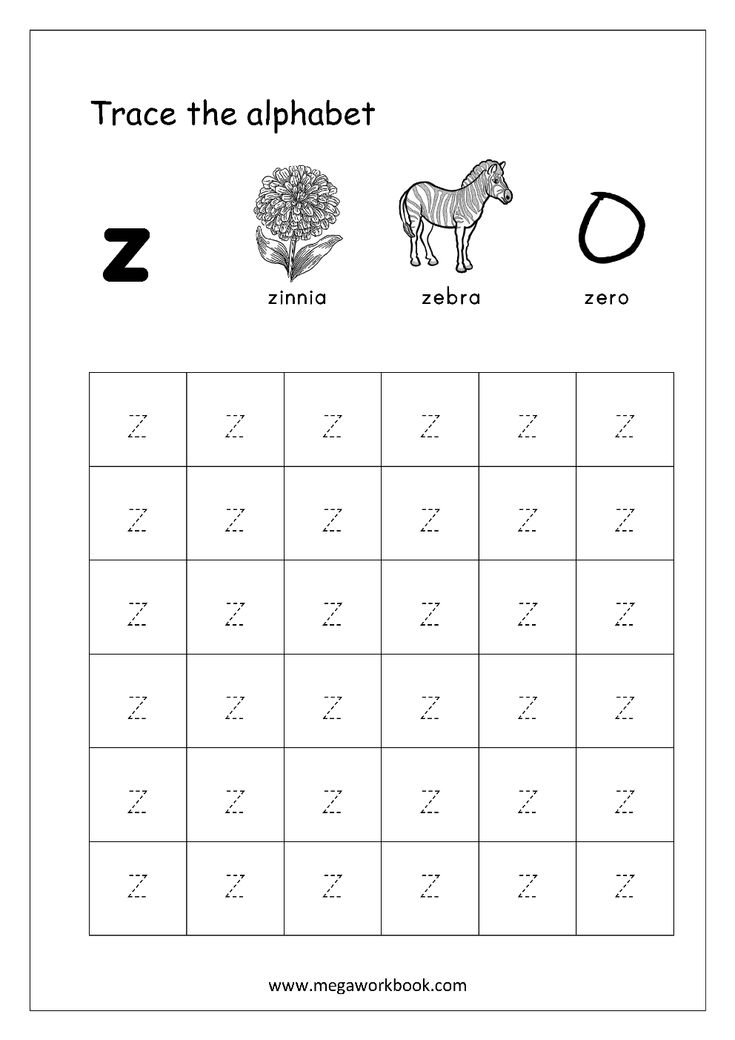
Effective learning tools evolve with the student's ability. An ideal lowercase z tracing worksheet series will include multiple levels of complexity. The initial sheet might feature a thick, dotted line for the child to follow. Subsequent worksheets can reduce the line weight and introduce arrows indicating stroke direction. Advanced versions may remove the tracing guide entirely, leaving only a starting dot, which encourages the child to rely on their internalized memory of the shape.
Integrating the Worksheet into Learning
For maximum effectiveness, the worksheet should be part of a broader literacy session rather than a standalone drill. Educators can introduce the sound /z/ as in "zebra" or "buzz" while the child traces the letter, linking the visual form with its phonetic property. Using different tools like crayons, markers, or even finger paints on the worksheet can keep the activity fresh and engaging, ensuring that the practice session remains enjoyable rather than a chore.


Supporting Visual Aids
Contextual imagery plays a significant role in reinforcing the lesson. A worksheet might pair the tracing exercise with images of a zigzag line, a zip fastener, or a zebra. These associations help children anchor the abstract letter to a concrete object that begins with the /z/ sound. This multi-sensory approach caters to different learning styles, making the acquisition of the lowercase z more robust and memorable.
Ultimately, a well-designed lowercase z tracing worksheet is more than a simple activity sheet; it is a carefully engineered tool for cognitive and physical development. It provides the structured support necessary for a young learner to gain confidence in their handwriting abilities. By focusing on this specific letter, children learn that writing is a systematic process, building a foundation that will support their educational journey for years to come.
Free Worksheet Resources
Finding suitable materials is straightforward, as numerous educational websites and teachers offer free printable lowercase z tracing worksheet options. When selecting a resource, look for clear, uncluttered designs that prioritize proper stroke order. High-resolution graphics ensure that the tracing lines are easy to follow, minimizing frustration and maximizing the learning potential of the exercise.




Related Articles

Tamil Letters Tracing Worksheet: Free Printable Practice for Kids
Mastering the foundational elements of language is a journey that begins with the smallest details, and for children embarking on the path of reading and...

Printable Dotted Letter A Tracing PDF Worksheet - Free Template
Mastering the foundational elements of written communication often begins with the simplest of tools, and the printable dotted letter a tracing pdf worksheet...

Free Tracing Worksheet Printables for Kids – Pre-Writing Practice and Letter Formation
For educators and parents constantly seeking high-quality, no-cost educational tools, the search for a reliable tracing worksheet free resource is a common...

Tracing Letters for Kids PDF: Fun, Free Printable Worksheets for Little Learners
Tracing letters for kids PDF resources have become an essential tool for parents and educators introducing children to the fundamentals of writing. These...
Fun Kids Tracing Shapes: Free Printable Worksheets for Little Learners
For many parents and educators, the journey into formal education begins with a simple yet profound activity: kids tracing shapes. This foundational exercise...

Free Printable Tracing Worksheets for Kindergarten – Fun Learning Activities
Free printable tracing worksheets for kindergarten represent a foundational resource for early childhood education, offering a tactile and engaging way for...