Hindi Letter Worksheet: Free Printable Akshar Pechan Practice Sheets
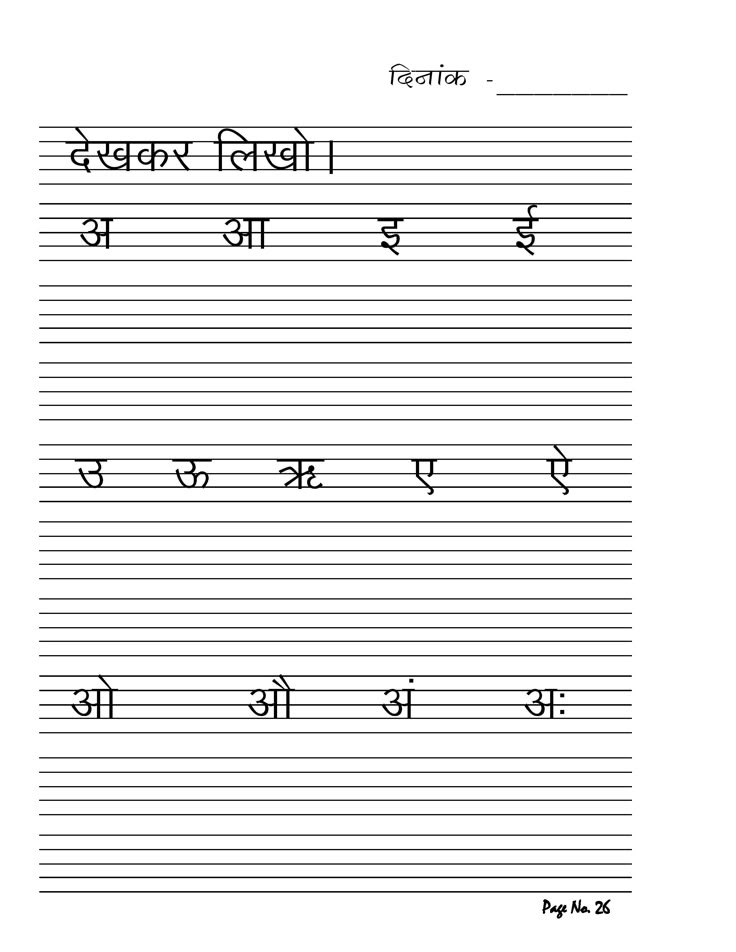
Mastering the Hindi alphabet is the foundational step for every child beginning their educational journey, and a well-designed letter worksheet in Hindi serves as the most effective tool for this process. These structured exercises move beyond simple rote memorization, offering a systematic approach to learning the distinct shapes and sounds of Devanagari script. By engaging with tracing lines and guided repetition, students build muscle memory and visual recognition simultaneously, which is crucial for developing fluent reading skills. The initial exposure to characters like अ, आ, क, and ख becomes a manageable task when broken down into actionable steps on a single page, transforming what could be an overwhelming task into a structured learning experience.
Why Structured Practice is Essential for Hindi Literacy
The complexity of the Hindi script, with its inherent matras (vowel signs) and compound consonants, demands a learning methodology that emphasizes consistency. A letter worksheet in Hindi provides the necessary repetition without the pressure of blank-page intimidation. Children can focus on the specific mechanics of stroke order—where to start, when to lift the hand, and how to form the shirorekha (headstroke)—before attempting to write freely. This scaffolding ensures that learners internalize the correct form, reducing the development of hard-to-correct habits early on. Ultimately, this structured practice builds confidence, allowing students to progress from guided tracing to independent composition.
The Components of an Effective Worksheet
An exceptional worksheet is more than just a grid of letters; it is a pedagogical tool designed with specific learning objectives. The most effective versions incorporate multiple stages of learning to cater to different skill levels. A typical sheet progresses from visual recognition to physical reproduction, ensuring a comprehensive understanding of the character. Key elements often include directional arrows indicating stroke sequence, dotted lines for tracing, and blank spaces for replication, all presented in a format that minimizes visual clutter to help the child focus on the task at hand.


| Hindi Character | Transliteration | Common Sound |
|---|---|---|
| क | ka | ka as in "kite" |
| ख | kha | kha as in "khan" |
| ग | ga | ga as in "go" |
| घ | gha | gha as in "ghost" (with breath) |
| ङ | nga | nga as in "sing" |
Integrating Vowel Sounds for Complete Words
Language acquisition moves beyond individual consonants, and a superior letter worksheet in Hindi addresses the integration of matras to form syllables. Once a student is comfortable with the base consonant, the worksheet introduces the inherent vowel sound, typically "ah," and then modifies it with diacritical marks. This teaches the child that changing the position of a vowel sign—whether it appears before, after, above, or below the consonant—alters the pronunciation entirely. Understanding this relationship early on prevents confusion when encountering more complex words, ensuring that decoding becomes an intuitive process rather than a memorization exercise.
Visual Discrimination and Error Correction
Confusion between visually similar characters, such as "क" (ka) and "ख" (kha) or "त" (ta) and "ट" (ta), is a common hurdle for new learners. A thoughtfully designed worksheet incorporates comparison exercises that train the eye to notice subtle differences in stroke width or the presence of a nasal dot (nukta). By prompting the student to identify the correct character or to circle the matching sound, these worksheets enhance visual discrimination skills. This attention to detail is vital for reading comprehension, as misidentifying a single character can completely change the meaning of a word.


For educators and parents seeking high-quality educational resources, the availability of diverse formats allows for customization based on the learner's age and ability. Whether looking for a simple worksheet focused on capital letter formation or a complex exercise involving cursive joining of letters, the digital accessibility of these materials ensures that practice can happen anywhere. This flexibility supports a consistent learning routine, turning travel time or quiet evening hours into productive sessions of engagement with the beautiful structure of the Hindi language.




Related Articles

KG Worksheet Hindi with Answers: Free Printable Practice Sheets
Mastering the metric system is a fundamental skill, and understanding the kilogram (kg) is central to that journey. For students in Hindi-medium schools...

Free Uppercase Letter Tracing Worksheets – Printable Alphabet Practice Sheets
Mastering the fundamentals of written communication begins with the building blocks of the alphabet, and for many young learners, this journey starts with...
Hindi Tracing Worksheets: Free Printable Practice for Kids
Mastering a new script involves more than just memorizing shapes; it requires dedicated practice and structured guidance. For anyone beginning their journey...

Free Printable Urdu Worksheet for KG 2 – Fun Learning Akshar Practice
Mastering the fundamentals of language is a journey that begins long before formal schooling, and for Urdu speakers, this often starts with engaging with a...

Free Tracing Worksheet Printables for Kids – Pre-Writing Practice and Letter Formation
For educators and parents constantly seeking high-quality, no-cost educational tools, the search for a reliable tracing worksheet free resource is a common...

Tamil Letters Tracing Worksheet: Free Printable Practice for Kids
Mastering the foundational elements of language is a journey that begins with the smallest details, and for children embarking on the path of reading and...