Large Number Chart 1-20: Master Counting & Sequencing Fast
Understanding a large number chart 1 20 is often the foundational step for anyone beginning their journey into mathematics, data visualization, or numerical analysis. This specific range provides a clear and manageable scope for exploring numerical sequences, patterns, and relationships that are essential for more complex calculations. Whether you are a student, a professional, or simply someone looking to sharpen their analytical skills, grasping the significance of numbers within this range is a powerful tool.
The Structure and Simplicity of 1 to 20
The large number chart 1 20 represents a compact yet comprehensive sequence that bridges the gap between basic counting and more advanced arithmetic. This span is long enough to demonstrate trends and patterns, such as the progression of odd and even numbers or the formation of simple multiplication tables, without becoming overwhelming. By focusing on this specific interval, learners can build confidence as they observe the logical and consistent nature of numerical order, turning abstract concepts into concrete understanding.
Visualizing Numerical Order
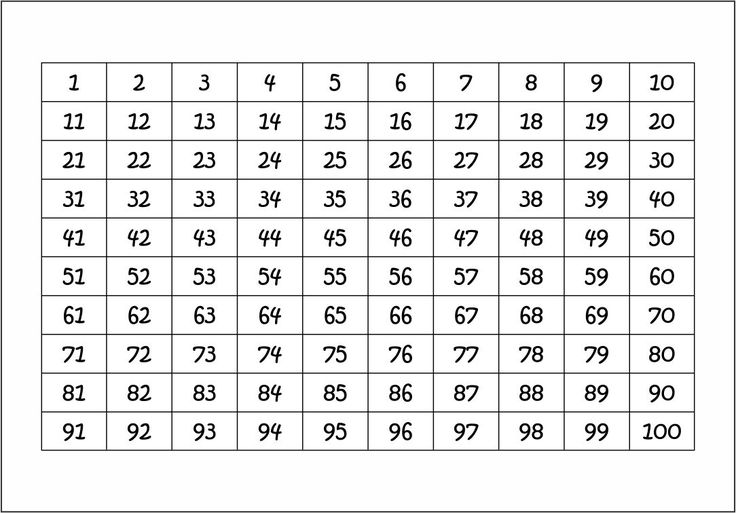
A visual representation of this chart transforms abstract digits into a tangible map that is easy to navigate. Seeing the numbers arranged in ascending order allows the eye to follow a natural path, reinforcing the concept of magnitude and proximity. This visual aid is particularly useful for identifying gaps, comparing values, and recognizing the incremental steps between each integer, which is vital for developing number sense.


Applications in Education and Daily Life
The utility of a large number chart 1 20 extends far beyond the classroom. In educational settings, it serves as a primary tool for teaching addition, subtraction, and skip counting, providing a scaffold for young mathematicians. In real-world contexts, this range is frequently encountered in tasks such as measuring ingredients, tracking scores, or managing time, making it a practical reference for everyday problem-solving and decision-making.
Building Blocks for Advanced Mathematics
Mastery of this numerical range is not just about memorization; it is about understanding the building blocks of mathematics. These numbers are the ingredients used in fractions, percentages, and basic algebra. For instance, knowing that 15 is composed of 10 and 5 allows for easier manipulation in equations. This chart acts as a springboard, enabling users to perform mental calculations more efficiently and accurately.


Patterns and Relationships Within the Range
Delving deeper into the large number chart 1 20 reveals consistent patterns that hold true across the entire numerical spectrum. The alternating sequence of odd and even numbers, the predictable increments in multiplication, and the symmetry in addition all contribute to a structured framework. Recognizing these relationships is key to moving from simple counting to genuine numerical literacy.
Data Representation and Analysis
Beyond arithmetic, this chart is a fundamental tool for data interpretation. It provides the basis for creating simple graphs, tallying results, and organizing information in a meaningful way. Whether you are tracking expenses or surveying opinions, the ability to reference and analyze data within the 1 to 20 range is a critical skill for making informed conclusions and identifying trends.




Related Articles

Master the Multiplication Chart 1-20: Your Ultimate Number Grid Guide
Mastering the fundamentals of arithmetic is the cornerstone of mathematical literacy, and the multiplication number chart 1 20 stands as an indispensable tool...

Number Chart 1-20 Tagalog: Counting in Filipino for Kids
Mastering the fundamentals of arithmetic is the first step toward mathematical literacy, and for Filipino learners, starting with the basics in their native...

The Ultimate Numbers List 1-10: Master Counting and Sequencing Fast
Understanding the sequence from one to ten forms the bedrock of numerical literacy. This fundamental range represents the building blocks for mathematics...

Fun Number Worksheets 1-20: Tracing, Counting & Writing Practice
Mastering the fundamentals of arithmetic begins with a solid grasp of the numbers that form the bedrock of all mathematics. The worksheet about numbers 1 20...

Free Number Chart 1-20: Printable Toddler Guide
Struggling to find a clear, ready-to-use free number chart 1 20 for teaching basic math skills or quick reference? This essential educational tool provides a...

Free Number Printables 1-20: Tracing, Coloring & Counting Sheets
Finding high-quality, ready-to-use number printables, especially specific ranges like 1 to 20, can be a game-changer for parents and educators. This guide...