Cute Zebra Drawing Ideas for Kindergarten Kids
Introducing a young student to the world of art often begins with the simplest of subjects, and the kindergarten zebra drawing stands as one of the most timeless and educational choices. This deceptively simple exercise transforms a child’s first encounter with structured drawing into a memorable lesson about pattern, symmetry, and form. By focusing on the bold contrasts of black and white, educators can guide little learners to see beyond basic shapes and understand how complex textures are built from simple lines.
The Educational Value of Zebra Illustrations in Early Childhood
The significance of the kindergarten zebra drawing extends far beyond creating a charming piece of wall art; it serves as a foundational exercise in visual development. At this critical stage, children are refining their motor skills and learning to translate three-dimensional concepts onto a two-dimensional surface. The distinct black-and-white stripes provide an immediate visual anchor, helping young students distinguish between foreground and background while practicing controlled wrist movements. This activity subtly reinforces cognitive connections, as they match the repetitive pattern of the stripes with real-world animal recognition, bridging the gap between observation and creation.
Breaking Down the Form: Step-by-Step Construction
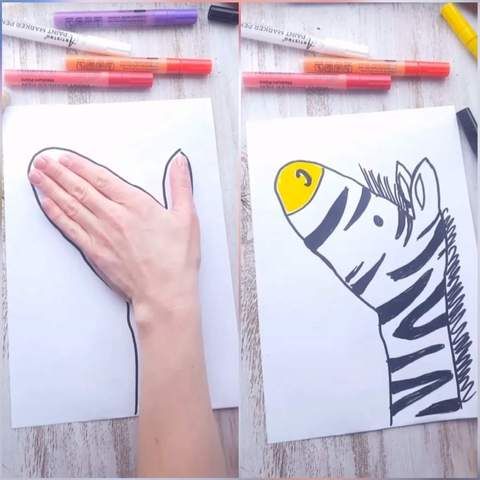
Effective instruction for a kindergarten zebra drawing relies on breaking the process into manageable, confidence-building steps. Rather than presenting a complex outline, teachers typically guide students to start with the largest shapes before adding intricate details. This methodology ensures that even the youngest artists can achieve a recognizable result without frustration. The process focuses on building the structure logically, ensuring the final composition is balanced and proportionate.


- Start with a simple circle or oval for the head, establishing the focal point of the creature.
- Add a large rectangle or rounded body shape connected to the head, forming the main mass.
As the form begins to take shape, the introduction of the stripes becomes the exciting core of the project. This is where the lesson shifts from mere replication to artistic interpretation.
- Draw two to three parallel lines down the back to create the spinal column, which acts as a guide for the stripe pattern.
- Encourage the children to draw curved lines connecting the head to the body, mimicking the natural arc of a zebra’s neck.
- Fill the body with bold, horizontal lines, spacing them evenly to create the iconic monochrome striping.
The Power of Contrast: Color Theory for Beginners
One of the most valuable lessons embedded in the kindergarten zebra drawing is the introduction to contrast. While the final product relies on a strict palette of black and white, the process of applying these colors teaches children about value and balance. Teachers often use this opportunity to discuss "positive" and "negative" space—the white areas of the paper become just as important as the black stripes. By experimenting with coloring within the lines (or intentionally leaving areas raw), children learn to appreciate the relationship between light and dark, a principle that is fundamental to all visual arts.
Adapting the Project for Different Skill Levels
A well-designed kindergarten zebra drawing activity is inherently flexible, allowing it to be tailored to a wide range of developmental stages. For toddlers or those new to drawing, the focus can remain on the basic shapes, simplifying the stripes to thick black bars that are easy to manage. As the students' dexterity improves, the complexity can increase. Older preschoolers can be challenged to create texture within the stripes by adding subtle cross-hatching or by using different tools like sponges or cotton swabs to create soft edges. This scalability ensures that the activity remains engaging for the entire classroom, providing a sense of accomplishment regardless of the final outcome.


Extending the Lesson: Integration with Storytelling
To maximize the impact of the kindergarten zebra drawing, educators often integrate the art session with a broader literacy or science unit. Pairing the drawing with a read-aloud of a classic children’s book about the savanna transforms the activity from a simple craft into a rich, interdisciplinary experience. While the paint dries, teachers can discuss the animal’s natural habitat, why zebras live in herds, and how their stripes might help them in the wild. This context gives the artwork meaning, turning the drawing from a passive task into a storytelling device that reinforces vocabulary and comprehension skills.
Ultimately, the legacy of a kindergarten zebra drawing lies in its ability to capture a specific moment in a child’s development—the moment they realize they can communicate a recognizable idea through lines and marks. It is a celebration of simplicity, where the stark beauty of the animal’s pattern inspires creativity and builds the essential confidence required for a lifelong journey in art.


Related Articles

Fun Line Drawing Ideas for Kindergarten Kids
Line drawing for kindergarten represents a foundational pillar in early childhood development, acting as the primary bridge between a child's innate scribbling...

Cute Bunny Print Drawing Ideas: A Step-by-Step Guide
The allure of the bunny print drawing lies in its ability to blend playful charm with artistic sophistication. More than just a simple pattern, this motif...

Fun Colour Drawing Ideas for Kids: Creative Art Activities
When a child picks up a crayon, they are not merely making lines on paper; they are embarking on a journey of discovery. Colour drawing for kids is a...

Kpop Demon Hunters Toca Boca Drawing: Cute Coloring Pages for Kids
The intersection of K-pop culture and digital art has created a fascinating niche for creative expression, where fans transform their favorite music icons into...

Kids Drawing Jungle: Creative Art Ideas for Little Explorers
Introducing children to the vibrant world of the jungle through drawing opens a door to a universe of color, texture, and untamed creativity. This simple act...

Cute Happy Birthday Card Design Drawing Ideas
Creating a happy birthday card design drawing transforms a simple greeting into a heartfelt expression of affection. The act of sketching allows for a personal...