How Many Letters in the Dutch Alphabet? SEO Guide
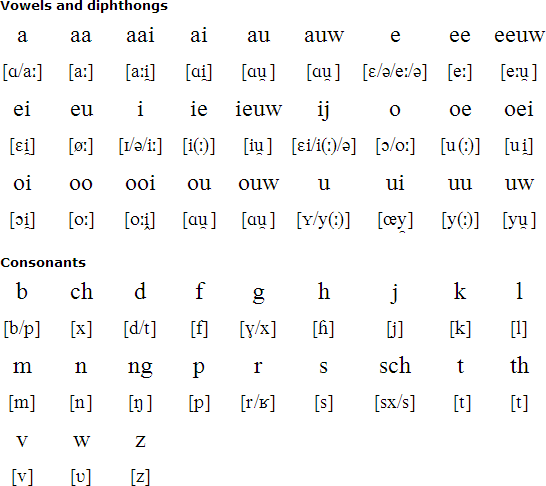
The Dutch alphabet, the foundation of written communication in the Netherlands and Flanders, consists of 26 standard letters derived from the Latin script, just like English. However, the total inventory of distinct symbols used to represent Dutch speech extends to 30 letters when including the digraphs "IJ" and "DZ," along with their uppercase counterparts. This specific arrangement defines the orthographic framework for one of the world's most phonetically consistent languages, where spelling closely mirrors pronunciation.
The Standard 26 Letters
At its core, the modern Dutch alphabet is built upon the same fundamental block of letters found in the English alphabet. These are the 26 letters from A to Z, which serve as the primary building blocks for the vast majority of Dutch vocabulary. The sequence follows the internationally recognized Latin alphabet order, making it immediately recognizable to English speakers while maintaining its unique linguistic identity through pronunciation.
The Unique Case of "IJ"
The most distinctive feature of the Dutch script is the handling of the digraph "IJ." Often considered the 25th letter of the alphabet, "IJ" represents a unique diphthong, specifically the /ɛi/ sound, as found in the word "mijn" (mine) or "vrij" (free). In dictionaries and telephone directories, words beginning with "IJ" are typically sorted as if they were spelled with a "Y," placing "ijs" (ice) alongside "jacht" (hunt). This convention elevates "IJ" to a status beyond a mere combination of two separate letters.


Capitalization Rules for IJ
When capitalizing words that begin with "IJ," the rules are specific and logical. Only the first letter receives the capitalization, resulting in "IJ" remaining in uppercase while the second letter reverts to lowercase. For example, the city of IJmuiden is written with a capital "I" and a lowercase "j" (IJmuiden). Similarly, the pronoun "ij" (they) becomes "IJ" at the start of a sentence but remains "ij" within a sentence, adhering to standard Dutch capitalization rules.
The Letter "DZ" and Other Considerations
While less common in everyday usage, the digraph "DZ" is officially recognized as a separate letter in the Dutch alphabet, primarily for linguistic and sorting purposes. It appears in a limited number of native Dutch words, such as "dzone" (a type of dessert) and in the suffix "-dzij," which denotes the plural imperative form of verbs. Alongside these, the apostrophe can appear in words like "'s avonds" (in the evening), but it is not classified as a letter of the alphabet.


Pronunciation Consistency
One of the greatest advantages of understanding the Dutch alphabet is the language's remarkable orthographic transparency. Unlike English, where spelling often obscures pronunciation, Dutch letters and letter combinations represent sounds with a high degree of consistency. The letter "g" is always a hard sound as in "gift," the "ch" combination produces a guttural friction sound, and the vowels maintain relatively stable pronunciations. This predictability makes learning to read and write Dutch significantly more straightforward than mastering English.
Total Count and Practical Use
For practical purposes, the Dutch alphabet contains 26 letters, but the linguistic reality includes 28 distinct symbols when accounting for the treated digraphs "IJ" and "DZ." This results in a total inventory of 30 character forms used in official sorting and dictionary compilation. In daily writing, however, the standard 26 are sufficient, with "IJ" functioning as a contextual ligature rather than a disruption to the core Latin script. This balance between tradition and linguistic efficiency defines the Dutch writing system.
Summary of Letter Count
To directly answer the central question: the Dutch standard alphabet contains 26 letters. For sorting and comprehensive linguistic purposes, this is expanded to include "IJ" and "DZ," bringing the recognized set to 28 distinct letter groups. Ultimately, whether viewed as 26, 28, or 30 depending on the context, the Dutch alphabet remains a logical and effective system that reflects the precise and orderly nature of the Dutch language itself.




Related Articles

How Many Letters in the UK Alphabet? The Complete Guide
The English alphabet used in the United Kingdom consists of 26 letters. This standard Latin script includes 5 vowels (A, E, I, O, U) and 21 consonants, forming...

How Many Letters in the Greek Alphabet? The Complete Guide
The Greek alphabet serves as the backbone of modern written language, forming the foundation for mathematical symbols, scientific notation, and even the...

How Many Letters in the Czech Alphabet? A Complete Guide
The Czech alphabet, the foundation of written communication in the Czech Republic, consists of 42 letters. This specific quantity often surprises learners from...

How Many Letters in the Ancient Greek Alphabet? A Complete Guide
To understand the number of letters in the ancient Greek alphabet is to grasp the foundation of one of history’s most influential writing systems. This script...

How Many Letters in the Chinese Alphabet? The Complete Guide
At first glance, asking about the number of letters in the Chinese alphabet seems straightforward, but it opens a door to a fascinating linguistic journey...

How Many Letters in the Greek Alphabet A to Z? The Complete Guide
At first glance, the question "how many letters in greek alphabet a to z" seems straightforward, but it reveals a fascinating journey into the heart of written...