Improve Handwriting Hindi Worksheets – Practice Kit for Beautiful Script
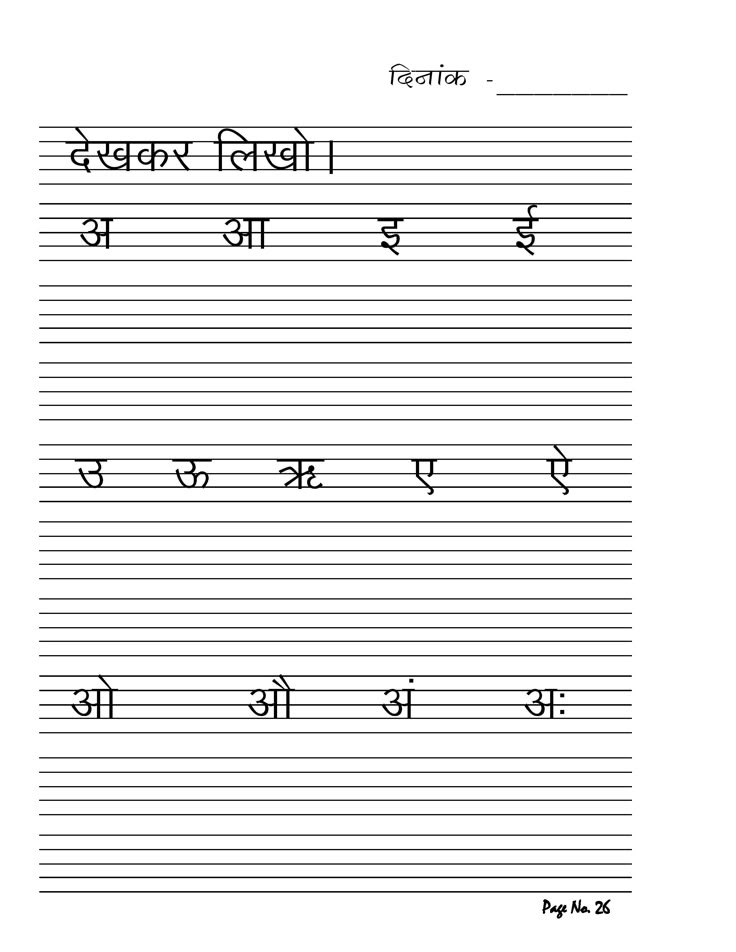
Mastering the intricacies of the Devanagari script requires a foundation built on deliberate practice. For children and language learners, handwriting Hindi worksheets serve as an indispensable tool, transforming the abstract shapes of characters into tangible writing skills. These structured exercises bridge the gap between passive recognition of Hindi letters and the active muscle memory needed to write them confidently, making the initial learning curve far more manageable.
Why Handwriting Practice is Non-Negotiable in Hindi Learning
The visual complexity of the Hindi alphabet, with its distinctive horizontal line (shirorekha) and numerous curves, demands a different approach than phonetic scripts. While typing has its place, handwriting activates unique cognitive pathways that are critical for long-term retention. Worksheets provide the guided repetition necessary to internalize the correct stroke order, ensuring that learners develop proper technique from the very beginning rather than having to unlearn bad habits later. This focus on the physical act of writing reinforces character recognition in a way that passive reading simply cannot match.
The Structure of Effective Hindi Worksheets
Not all practice materials are created equal, and high-quality handwriting Hindi worksheets share specific characteristics that maximize their educational value. They progress logically from simple isolated letters (varn) to complex conjuncts (jodakshar), allowing learners to build competence incrementally. Effective designs incorporate clear arrow markers, dotted lines, and ample tracing space, which are essential for guiding the hand and establishing the correct formation for each character. This structured scaffolding ensures that learners develop a consistent and legible style.


Key Components of a Well-Designed Worksheet
- Stroke Order Guides: Numbered arrows indicating the precise direction and sequence of strokes.
- Tracing Exercises: Rows of dotted letters for the learner to trace over to build muscle memory.
- Copywork Sections: Blank lines for the student to independently write the characters they have just traced.
- Vowel Integration: Exercises that combine consonants with accompanying matra symbols to form syllables.
- Word Formation: Simple CVC (consonant-vowel-consonant) words to apply letter writing in a contextual setting.
- Consistent Sizing: Clearly defined boxes or grids to maintain uniform letter height and alignment.
Beyond the Basics: Worksheets for Different Proficiency Levels
The versatility of handwriting Hindi worksheets means they are effective across a wide spectrum of learners. Beginners benefit from worksheets that focus on individual vowels and consonants, breaking down the script into its most basic components. Intermediate students can utilize sheets that concentrate on vyanjan (consonant clusters) and the formation of complex two-part consonants. Even advanced learners seeking to perfect their cursive handwriting style can find value in worksheets that emphasize flow, connecting strokes, and maintaining a consistent slant, ensuring their writing is both beautiful and readable.
The Role of Worksheets in Modern Education
In an increasingly digital classroom, the role of handwriting Hindi worksheets might seem counterintuitive, yet they remain a vital component of a balanced literacy curriculum. For teachers, these worksheets provide a standardized tool for assessing individual student progress and identifying specific areas where a learner might be struggling with a particular character. For parents engaging in home schooling or supplemental practice, they offer a structured, screen-free activity that allows children to disconnect from digital devices while still actively building a critical language skill. The tactile experience of writing by hand creates stronger neurological connections than passive viewing ever could.


Maximizing the Benefits of Your Practice
To get the most out of handwriting Hindi worksheets, consistency is more valuable than intensity. A learner who practices for 15 focused minutes daily will see greater improvement than one who spends an hour once a week. It is crucial to prioritize quality over quantity, ensuring that each stroke is deliberate and correct rather than rushing through the lines. Pairing the worksheet with verbal pronunciation of the characters reinforces the connection between the visual symbol, its sound, and the physical motion required to write it. This multi-sensory approach cements the learning far more effectively than silent transcription alone.




Related Articles
Free Download Hindi Handwriting Worksheets PDF – Practice & Improve Your Handwriting
Mastering the art of penmanship is a foundational skill, and for Hindi language learners, this journey begins with structured practice. Finding high-quality...

Odia Sentences for Handwriting Worksheets: Practice & Improve Your Script
Mastering the foundational skill of handwriting is a journey that often begins with deliberate, structured practice. For educators and parents supporting Odia...

Free Arabic Handwriting Worksheets for Adults PDF – Practice Cursive & Improve Your Script
Mastering the flowing curves and precise angles of Arabic script is a journey many adults are eager to undertake, whether for the purpose of connecting with...

Free Printable Urdu Handwriting Worksheets for Adults – Practice & Improve Your Script
For adults looking to reconnect with the foundational elements of language, free printable Urdu handwriting worksheets offer a unique and accessible pathway to...

Handwriting Practice Adults Printable Worksheets Improve Cursive Script
For many adults, the act of putting pen to paper feels like a relic of a bygone era, overshadowed by the sterile efficiency of keyboards and touchscreens. Yet...

Free Printable Victorian Cursive Handwriting Worksheets for Elegant Script Practice
For educators and parents seeking to instill a foundational appreciation for penmanship, printable Victorian cursive handwriting worksheets free resources...