Creative Hand Tracing Drawing Ideas: 50+ Easy & Cute Designs
Hand tracing drawing is an intimate and immediate form of visual expression that bridges the gap between observation and creation. This technique involves placing your hand on a surface and meticulously rendering its contours, shadows, and textures with a pencil or pen. The result is a striking, high-contrast image that feels both personal and timeless, making it a perfect starting point for artists of all levels.
The Allure of Simplicity in Hand Tracing
What makes hand tracing drawing ideas so compelling is their accessibility. You do not need specialized materials or advanced skills to begin; a simple piece of paper and a graphite pencil are enough to unlock a world of creative potential. This simplicity lowers the barrier to entry, allowing you to focus entirely on the relationship between your hand, your eye, and the mark-making process. It is a practice rooted in observation rather than imagination, which makes it an excellent exercise for developing foundational drawing skills.
Exploring Gesture and Contour
At its core, hand tracing is an exercise in contour drawing. This involves tracing the outer edges of your hand while simultaneously mapping the negative spaces between your fingers. By focusing on the outlines and the shapes created by the spaces, you train your brain to see objects not as familiar forms, but as complex arrangements of lines and angles. This heightened awareness of negative space is a critical skill that translates to virtually every other form of drawing and illustration.


Advanced Variations and Creative Prompts
Once you are comfortable with the basic outline, you can evolve your hand tracing drawing ideas into more complex artistic statements. Moving beyond the simple contour, you can experiment with cross-hatching and shading to emphasize the three-dimensional form of your hand. By observing where the light source hits your hand, you can create dramatic shadows and highlights, transforming a flat tracing into a volumetric study of bone, muscle, and skin.
- Blind Contour Drawing: Keep your eyes solely on your hand and never look at the paper. This technique loosens your control and results in a raw, energetic line that captures the essence of movement.
- Continuous Line Drawing: Draw the entire hand without lifting your pencil from the page, creating a single, unbroken line that defines the form.
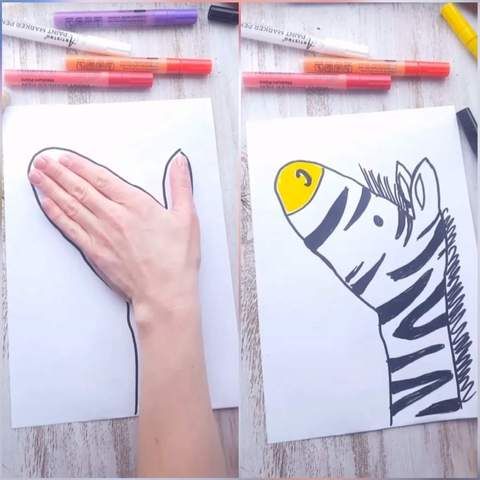
- Abstract Interpretation: Use the tracing as a template and fill it with intricate patterns, textures, or geometric shapes, pushing the realism into the realm of abstract art.
Incorporating Color and Mixed Media
To add another layer of depth to your hand tracing drawing ideas, consider introducing color. Colored pencils, watercolor washes, or ink can be used to fill in the traced shape, allowing you to explore mood and symbolism. A hand shaded in cool blues might evoke calm or melancholy, while fiery reds and oranges could represent passion or anger. Combining tracing with collage—such as placing a traced hand over a textured background—can also create compelling visual narratives.


Thematic and Conceptual Approaches
Beyond technical skill, hand tracing drawing ideas offer a powerful platform for conceptual exploration. The hand is a universal symbol of creation, labor, and humanity. You might choose to trace hands engaged in specific actions—typing, holding a flower, or clenching—to tell a story without words. Alternatively, creating a series of hands tracing different gestures can serve as a visual journal of your emotional states over time.
Ultimately, the strength of hand tracing lies in its dual nature: it is both a technical exercise and a form of personal expression. By returning to this simple act repeatedly, you can track your progress, experiment with new styles, and connect with the fundamental joy of making marks. Whether you seek to refine your realism or explore abstract themes, the outline of your hand provides a timeless and versatile canvas for your artistic journey.




Related Articles

Happy Birthday Hand Drawing: Cute & Easy Sketch Ideas
The simple act of a happy birthday hand drawing can transform a digital message into a heartfelt expression of care. Unlike a typed greeting, a sketch of a...

Happy Birthday Whiteboard Drawing: Creative & Easy Ideas
Celebrating a milestone birthday often calls for something more personal and dynamic than a standard store-bought card. A happy birthday whiteboard drawing...

Creative Kids Drawing Competition Ideas: Fun Themes & Easy Prompts
Organizing a kids drawing competition is a fantastic way to nurture creativity, build confidence, and provide a platform for young artists to express...

Happy Birthday Drawing: 100+ Cute & Creative Ideas For All Ages
Creating a drawing of happy birthday is a wonderful way to add a personal touch to any celebration. Whether you are an experienced artist or a complete...

Master Tracing Paper Drawing Design: Tips, Tutorials & Creative Ideas
Tracing paper drawing design occupies a unique space where technical precision meets artistic intuition. For architects, illustrators, and hobbyists alike...
Easy Animal Drawings by Tracing Your Hand: Step-by-Step Guide
Returning to the fundamentals of art is often the most effective way to unlock new creative potential. The practice of drawing animals by tracing your hand...