Ultimate Guide to German Tank Colors: Camouflage & Markings
The evolution of German tank colors reflects a complex interplay of tactical necessity, industrial capability, and battlefield pragmatism. From the dark field gray of the early Panzers to the disruptive camouflage of late-war vehicles, the story of German armor hues is a direct narrative of military innovation under pressure. Understanding these color schemes provides critical insight into the operational doctrine and technological constraints faced by the Wehrmacht and the Waffen-SS throughout the conflict.
The Standard Palette: Field Gray and the Pursuit of Uniformity
During the invasions of Poland and France, the iconic *Feldgrau* (field gray) was the definitive color for the vast majority of German tanks. This specific medium-gray shade was not chosen for camouflage in woodland or desert environments, but rather for its logistical efficiency. It provided an excellent neutral base that concealed dirt and battlefield damage better than a darker finish, while also simplifying the supply chain across different units and fronts. This standardized paint scheme aimed to create a unified and imposing visual identity for the Blitzkrieg, masking the individual vehicle within the broader formation.
Variants and Early War Adjustments
While field gray dominated, variations existed. Early war tanks often featured a darker, sometimes greenish-gray factory finish that was gradually standardized. Command tanks sometimes received tan or earth-tone covers to help them stand out for reconnaissance purposes. Furthermore, vehicles operating in specific theaters, like the North African campaign, were often repainted with a sandy-yellow wash to blend into the desert backdrop, a pragmatic solution that highlighted the rigidities of strict standardization versus battlefield reality.


The Shift to Camouflage: Breaking from Tradition
As the war progressed and Allied air superiority grew absolute, the simple gray monochrome became a death sentence. Commanders on the Eastern Front were the first to experiment, realizing that the stark contrast of a factory-fresh tank made it an easy target for Soviet aircraft. This led to the widespread adoption of disruptive camouflage patterns, a move that prioritized survivability over the aesthetic unity of the parade ground. The focus shifted from identifying friend from foe at a distance to simply making the tank harder to spot and hit.
Patterns of Survival: Splinter and Earth Tones
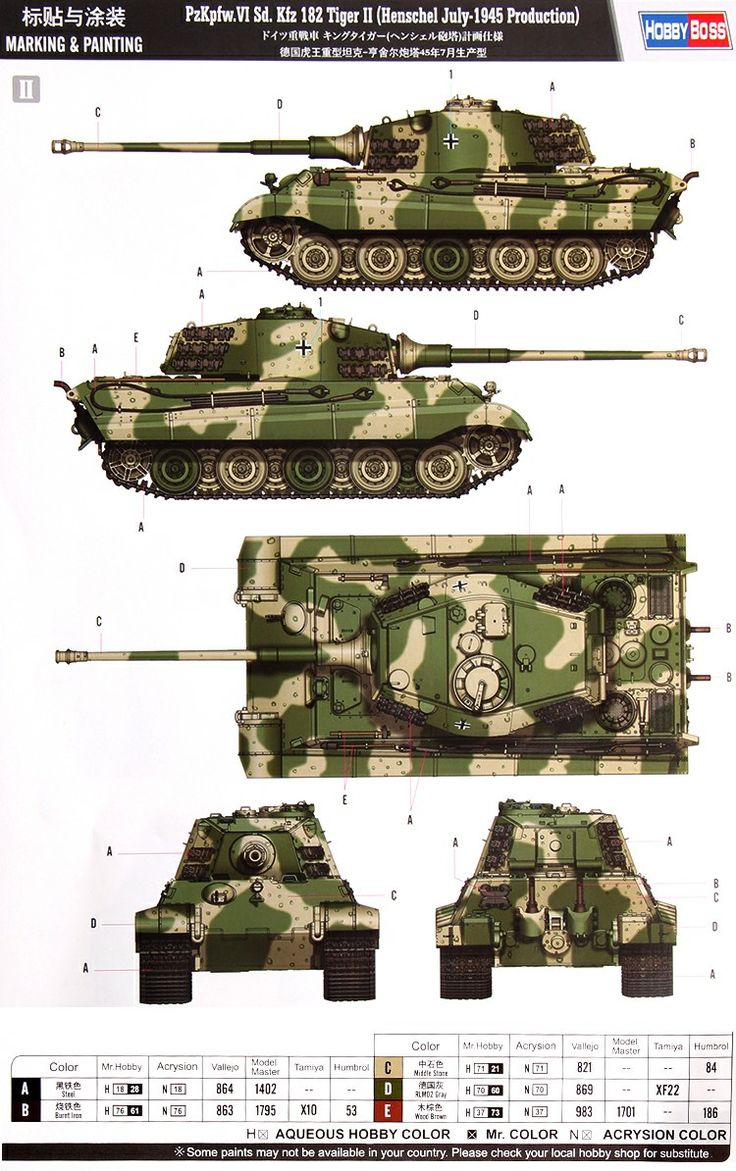
The introduction of patterned camouflage was a direct response to the vulnerability of solid-colored vehicles. Splinter pattern (*Splittertarn*) became the norm, utilizing sharp, geometric shapes in shades of green, brown, and black to break up the tank's outline against the forested and urban landscapes of the Eastern Front. Later, as the conflict moved west and the tactical focus shifted to defense, patterns evolved to incorporate more ochre and tan hues, designed to blend with the rubble of the Siegfried Line and the hedgerows of Normandy.


| Era/Location | Primary Colors | Typical Pattern | Strategic Goal |
|---|---|---|---|
| Early War (1939-1941) | Field Gray (Feldgrau) | Solid | Logistical Unity & Tradition |
| Eastern Front (1942-1944) | Tan, Brown, Black, Green | Splittertarn, Flecktarn | Disruption & Concealment |
| Western Front (1944-1945) | Ochre, Brown, Gray, Black | Drucktarn, Urban Schemes | Urban Blending & Defensive Posture |
Factory Finishes and the Reality of Combat
It is crucial to distinguish between the paint used in official depots and the field-applied treatments seen in historical photographs. Many photographs depict tanks with a rich, glossy black finish. This was rarely the standard paint but rather a temporary coating of *Zeltbahnen* (tent canvas) pitch or a thick black tar-paint applied directly over the factory gray for immediate camouflage upon reaching the front lines. This raw, oily appearance is a hallmark of the desperate, immediate nature of warfare on the Eastern Front, particularly during the retreat of 1943-1944.
Post-War Influence and Modern Interpretation
The color schemes developed by German tank units continue to be a primary reference point for military modelers and wargamers. The intricate debates over the exact shade of gray, the specific tones of a *Dunkelgelb* (dark yellow), or the precise layout of a *TurmFarbe* (turret color) for a specific unit and date are a testament to the complexity of the topic. For historians and enthusiasts, these colors are not merely aesthetic choices; they are tangible links to the tactical thinking, industrial constraints, and lived experiences of the soldiers who operated these formidable machines.




Related Articles

The Ultimate Guide to German Dog Colors: Breed Standards & Genetics
Understanding german dog color begins with recognizing that a dog’s coat is far more than just a visual trait; it is a complex genetic expression deeply...

Shadow Dragon Colors Veilguard: The Ultimate Guide to Camouflage & Myth
The shadow dragon colors veilguard represents one of the most enigmatic chromatic phenomena in the arcane spectrum, blending deep obsidian tones with ephemeral...

German Ambush Camouflage: The Ultimate Painting Guide & Techniques
Capturing the specific visual language of a German ambush position requires more than just dabbing on paint; it demands an understanding of how light interacts...

The Ultimate Guide to Colors of Leopard Geckos: Vibrant Patterns & Genetics
The coloration of a leopard gecko is far more than just a visual trait; it is a complex genetic blueprint that defines the very identity of these popular...

The Ultimate Guide to Horse Coat Colors: A Visual Directory of Types of Horse Colouring
At first glance, the spectrum of horse colours appears straightforward, yet a closer examination reveals a sophisticated palette governed by complex genetics...

Stunning Fall Colors in North Carolina: Your Ultimate 2029 Guide
North Carolina presents one of the most dramatic and reliable autumn spectacles in the United States, drawing travelers from across the continent each year...