Free Printable Rhyming Worksheets for Preschoolers: Fun Early Literacy Activities
Free printable rhyming worksheets for preschoolers are a cornerstone of early literacy development, offering a structured yet playful approach to building foundational language skills. These resources transform the complex cognitive process of phonological awareness into simple, engaging activities that captivate young learners. By focusing on the sounds and patterns within words, they prepare children for the journey of reading and writing long before they enter a formal classroom setting.
Why Rhyming Matters in Early Childhood
The ability to identify and produce rhymes is a critical predictor of future reading success. When preschoolers engage with rhyming worksheets, they are not just having fun; they are actively training their ears to distinguish between similar sounds. This practice sharpens auditory discrimination, helping children break down words into their constituent phonemes. Consequently, this foundational skill directly supports vocabulary expansion, memory retention, and the decoding abilities necessary for fluent reading.
Benefits of Printable Worksheets
Printable rhyming worksheets offer a distinct advantage over purely digital or non-structured activities. They provide a tactile learning experience where children can physically circle, draw lines, or paste stickers next to rhyming pairs. This hands-on interaction reinforces muscle memory and hand-eye coordination. Furthermore, these worksheets are easily accessible, allowing parents and educators to integrate targeted practice into daily routines without extensive preparation or cost.


Features of High-Quality Printables
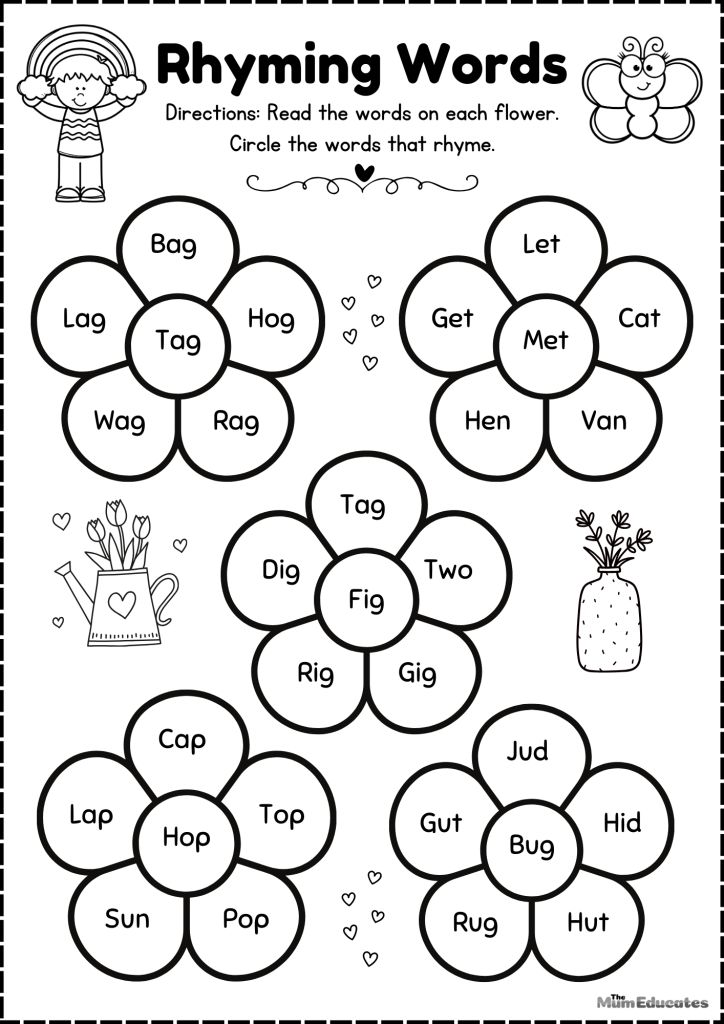
Not all worksheets are created equal, and the best ones share specific characteristics that maximize their educational impact. Look for designs that utilize vibrant, child-friendly illustrations to maintain interest and provide visual context for the rhyming words. The layout should be uncluttered with ample writing space, ensuring that the task feels manageable rather than overwhelming for a young child.
| Skill Focus | Activity Type | Learning Outcome |
|---|---|---|
| Phonological Awareness | Matching Pictures | Identify similar ending sounds |
| Vocabulary Building | Fill-in-the-Blank | Expand word knowledge |
Practical Applications for Learning
These worksheets serve as versatile tools that adapt to various learning environments. In a classroom, a teacher might use them as a center activity to reinforce a weekly letter sound. At home, a parent can utilize them for quiet time practice or as a screen-free alternative to educational apps. The flexibility of the format allows for differentiation, enabling adults to adjust the difficulty level to match the child's current abilities.


Developing a Consistent Routine
To fully leverage the benefits of these resources, consistency is key. Incorporating a short rhyming session into the daily schedule—perhaps after snack time or before nap time—creates a predictable and calming ritual. This regularity helps children understand the importance of language play and builds a habit of active listening. Over time, you will likely observe the child becoming more confident in identifying rhymes independently.
Supplementing with Interactive Strategies
While the worksheets are effective, their impact is amplified when paired with interactive verbal exercises. After completing a page, encourage the child to say the words aloud, emphasizing the rhyming sounds. You can extend the activity by challenging them to find real-world objects in the room that rhyme with the words on the page. This connection between the worksheet and the physical world solidifies learning and makes the process dynamic rather than static.


Related Articles

Free Printable Preschool Reading Worksheets – Fun Early Literacy Activities
Parents and educators navigating the early stages of a child's academic journey often seek practical tools that combine learning with accessibility. A free...

Free Printable Preschool Reading Worksheets PDF - Fun Early Literacy Activities
Navigating the world of early education can feel overwhelming for parents and guardians, especially when seeking structured resources that are both effective...

Free Printable Reading Worksheets for Preschool PDF – Fun Early Literacy Activities
Finding high-quality, engaging literacy resources for young learners can often feel overwhelming for parents and educators. Free printable reading for...

Free Printable Literacy Worksheets for Preschoolers: Fun Learning Activities
Free printable literacy worksheets for preschoolers provide a structured yet flexible foundation for early childhood education. These resources allow parents...
Free Printable Preschool Rhyming Worksheets: Fun Early Learning Activities
Free printable preschool rhyming worksheets represent a cornerstone resource for early childhood educators and parents committed to fostering foundational...

Fun Rectangle Shape Worksheets for Preschoolers – Free Printable Activities
Rectangle shape worksheets for preschool provide a foundational building block for early mathematical thinking. By focusing on this specific geometric form...