Free Preschool Rhyming Worksheets: Fun Early Learning Activities
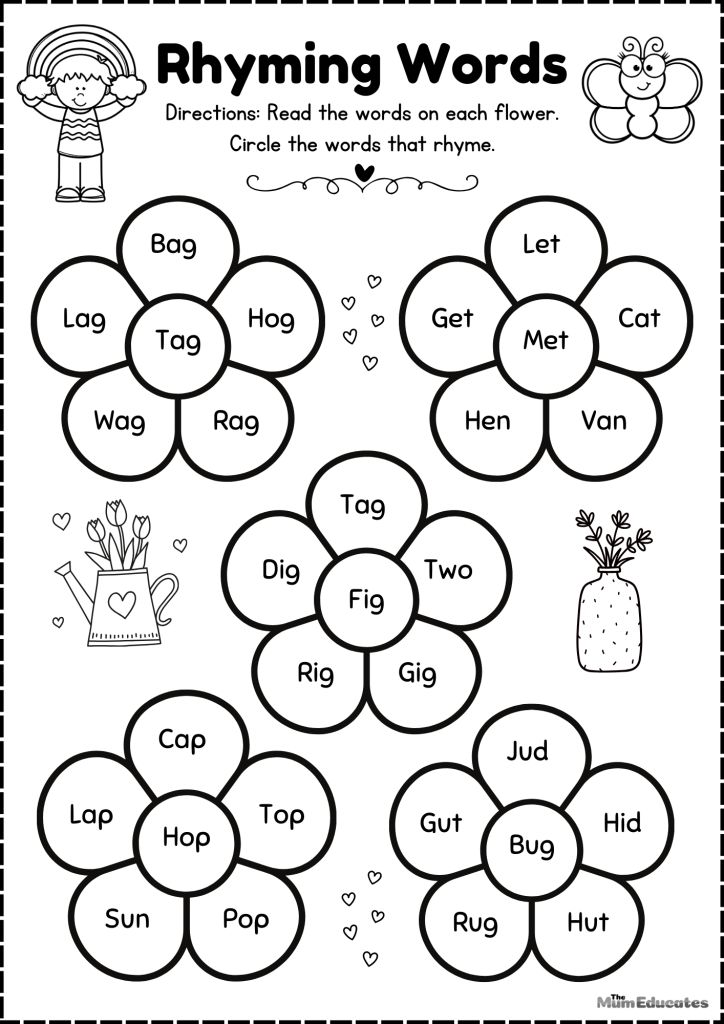
Early literacy development hinges on a child's ability to recognize and manipulate sounds within words, a foundational skill known as phonological awareness. Free preschool rhyming worksheets provide an exceptionally accessible and effective method for parents and educators to cultivate this critical ability in a stress-free, engaging environment. By focusing on the playful recognition of word endings and sound patterns, these resources transform essential learning into an enjoyable game, laying a robust groundwork for future reading success without requiring any financial investment.
The Foundational Role of Rhyming in Preschool Learning
Rhyming is far more than a simple nursery game; it is a vital cognitive exercise that sharpens a young child's auditory processing skills. Before a child can decode printed letters, they must first understand that words are composed of distinct sounds. Free preschool rhyming worksheets are meticulously designed to isolate and practice this specific skill, helping children discern the subtle similarities and differences between phonemes. This focused auditory training is a proven predictor of future reading proficiency, as it develops the ear necessary to distinguish the individual sounds that form words.
Advantages of Utilizing Free Educational Resources
The primary advantage of free preschool rhyming worksheets lies in their unparalleled accessibility and versatility. Any caregiver or teacher can instantly download and print high-quality materials, ensuring that effective learning tools are available to all, regardless of budget constraints. Furthermore, these resources are incredibly flexible; they can be used for individual seat work, small group activities, or as a calming task for early finishers. This adaptability makes them an indispensable asset in both structured classroom settings and informal home learning environments.


Key Skills Developed Through Practice
- Enhanced phonological awareness and auditory discrimination.
- Improved vocabulary expansion through exposure of new rhyming word pairs.
- Strengthened memory and pattern recognition abilities.
- Increased confidence in early literacy tasks through repetition and play.
Practical Strategies for Worksheet Integration
To maximize the educational impact of these worksheets, integrating them with multi-sensory activities is key. For example, after completing a matching exercise on the page, encourage the child to stand up and act out the rhyming words, or use physical objects like blocks to create "rhyming towers." Turning the worksheet into a game by timing how quickly they can find all the rhyming pairs or asking them to generate their own rhyming words for the pictures solidifies the learning in a memorable and enjoyable way.
Selecting High-Quality and Engaging Worksheets
Not all free resources are created equal, so it is important to seek out worksheets that prioritize clarity and pedagogical soundness. Look for designs that feature bright, non-distracting illustrations and simple, uncluttered layouts to prevent overwhelming young learners. The best worksheets progressively increase in difficulty, starting with obvious rhymes (like cat/hat) and gradually introducing more complex patterns. High-quality printables will also incorporate a variety of exercise formats, such as cut-and-paste tasks, fill-in-the-blank sequences, and simple matching games, to maintain a child's interest.


Supporting Learning Beyond the Worksheet
The true power of a preschool rhyming worksheet is realized when the skills practiced on the page are connected to the real world. Parents and teachers should view the worksheet not as an isolated task, but as a springboard for broader conversation. Point out rhyming words in the environment—on a cereal box, in a storybook, or during a walk to the park. This consistent reinforcement helps children understand that the phonics rules they are learning are living, breathing components of language, not just isolated exercises on a page.
Frequently Asked Questions for Educators and Parents
Navigating the implementation of these resources can raise practical questions. Understanding the appropriate age range, the ideal frequency of use, and how to monitor progress ensures that the experience remains positive and productive for the child. Below are some of the most common inquiries regarding the use of rhyming practice materials.
| Question | Helpful Answer |
|---|---|
| At what age should I introduce rhyming worksheets? | Most children show readiness between the ages of 3 and 5, though exposure can begin earlier through oral rhyming games. |
| How often should these worksheets be used? | Short, frequent sessions (10-15 minutes) are far more effective than infrequent, longer drills to maintain engagement. |
| What if my child is not interested? | Switch to a different format, such as rhyming bingo or songs, and return to the worksheets later when the child is more receptive. |
| Can these be used for children learning a second language? | Absolutely, they are excellent for building phonemic awareness in any language, provided the language relies on similar sound patterns. |



Related Articles
Free Printable Preschool Rhyming Worksheets: Fun Early Learning Activities
Free printable preschool rhyming worksheets represent a cornerstone resource for early childhood educators and parents committed to fostering foundational...
Free Printable Rhyming Worksheets for Preschool – Fun Learning Activities
Free printable rhyming worksheets for preschool represent a foundational tool for early literacy development. These engaging resources introduce young learners...

Free Preschool Worksheets PDF Free Download: Fun Learning Activities for Kids
Finding high-quality, ready-to-use educational materials for young learners can often feel like a daunting task for parents and educators. The search for...

Free Printable Shape Tracing Worksheets for Preschool: Fun Learning Activities
Free printable shape tracing worksheets for preschool represent a cornerstone in early childhood education, offering a simple yet profoundly effective method...

Free Printable Thanksgiving Preschool Worksheets – Fun Learning Activities for Kids
Free printable Thanksgiving preschool worksheets represent a valuable resource for parents and educators preparing children for the holiday season. These...

Preschool Pre K Math Worksheets: Fun Early Learning Activities
Preschool pre K math worksheets act as a foundational bridge between playful early learning and the structured world of elementary academics. These resources...