Fun Shape Drawings for Kindergarten: Easy Step-by-Step Guide
Introducing drawing using shapes for kindergarten is one of the most effective ways to build a child's foundational art skills. This method transforms the complex world of illustration into manageable parts, helping little learners see the world as a collection of simple, recognizable forms. By breaking down objects into circles, squares, and triangles, children gain confidence in their ability to create something recognizable from the very first attempt.
The Cognitive Benefits of Shape-Based Drawing
Beyond just creating art, drawing with shapes supports critical cognitive development in kindergarten-aged children. This activity reinforces shape recognition, a key pre-math skill that lays the groundwork for geometry and spatial awareness. As they analyze an object and decide which shape represents an eye or a window, children enhance their problem-solving abilities and visual discrimination, which are essential for early reading and math.
Developing Fine Motor Skills and Control
Repurposing shapes into drawings provides an excellent opportunity to develop the small muscles in the hands and fingers. Holding a crayon or marker to draw a straight line for a house or a curved line for a sun helps children build the precision and control needed for writing. This practice strengthens the pencil grasp required for future academic success, making drawing with shapes a dual-purpose exercise in creativity and physical development.


Practical Strategies for Educators and Parents
To effectively guide young artists, it is helpful to follow a structured progression. Start with the most basic geometric forms and gradually combine them to create more complex images. The goal is to make the process feel like play, ensuring the child focuses on the joy of creation rather than the pressure of perfection. Here are key steps to implement this method:
- Begin with isolated shapes and discuss their attributes.
- Demonstrate how to combine shapes to form familiar objects.
- Encourage tracing to build muscle memory before freehand drawing.
- Use high-contrast markers or crayons to make the shapes stand out.
- Praise the process and effort rather than the final likeness.
Step-by-Step Drawing Process
A structured approach ensures that the learning experience is both effective and enjoyable. The process should move from the general to the specific, allowing the child to build the image logically. This method reduces the overwhelm of a blank page and provides a clear roadmap for success.


| Step | Action | Example |
|---|---|---|
| 1. Identify | Choose the main subject | An animal, a vehicle, or a fruit |
| 2. Deconstruct | Break it down visually | A cat becomes circles for eyes and a triangle for ears |
| 3. Arrange | Place the shapes on the page | Position the head and body loosely |
| 4. Refine | Connect and adjust | Add lines for legs and tail to complete the form |
Transitioning to Advanced Creativity
Once a child masters the basics of drawing using shapes for kindergarten, they can easily evolve into more complex artistic expressions. Understanding how to build a face with simple ovals and circles allows a child to experiment with different emotions and styles. This foundation empowers them to move from realistic representation to abstract art, fostering a lifelong appreciation for visual creativity.
Building Confidence and a Growth Mindset
Perhaps the most significant advantage of this technique is the boost in confidence it provides. When a child realizes they can create a recognizable picture by following simple steps, they internalize a powerful message: they are capable of learning new things. This early success instills a growth mindset, encouraging them to approach challenges in other areas of life with the same determination and resilience.


Related Articles

Kindergarten Tiger Drawing: Easy Step-by-Step Guide for Kids
Capturing the energetic spirit of a kindergarten tiger drawing involves more than just copying a template; it is about translating a child’s vibrant...

Directed Drawing Pumpkin Kindergarten: Easy Step-by-Step Guide for Kids
Directed drawing pumpkin kindergarten activities provide a structured and supportive pathway for young children to explore artistic expression. This method...
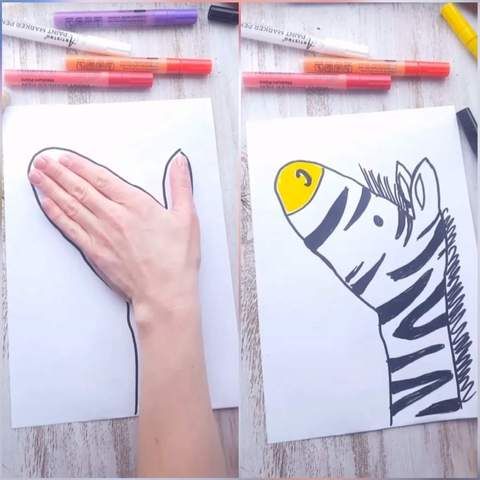
Easy Animal Drawings by Tracing Your Hand: Step-by-Step Guide
Returning to the fundamentals of art is often the most effective way to unlock new creative potential. The practice of drawing animals by tracing your hand...
Fun Shape Drawing for Kids: Creative Step-by-Step Tutorials
Every memorable scene in a child’s first picture book begins as a simple exercise in imagination, where a crooked circle becomes the sun and a wandering line...

Step-by-Step K-Pop Demon Hunters Drawing Tutorial: Easy Guide for Fans
Learning to draw the nimble hunters from the hit game K Pop Demon Hunters offers a unique blend of anime aesthetics and dynamic action poses. This specific...

Easy Zoey Kpop Demon Hunters Drawing Tutorial: Step-by-Step Guide
Capturing the essence of a beloved character is a rewarding challenge, and learning how to create an easy Zoey Kpop Demon Hunters drawing is a fantastic way to...