Free Class 3 Handwriting Worksheets – Improve Cursive Writing Skills
Class 3 handwriting worksheets represent a critical developmental tool for children aged 8 to 9, bridging the gap between basic letter formation and fluent cursive script. At this stage, students are refining their motor skills, focusing on consistency in size, spacing, and alignment. These worksheets provide the structured practice necessary to transition from erratic scribbles to confident, legible writing that will serve as the foundation for academic success.
The Developmental Significance of Class 3 Writing
Moving into the third class, the expectations for written work undergo a significant transformation. The focus shifts from simply forming letters correctly to constructing words efficiently and writing for longer durations without fatigue. Class 3 handwriting worksheets are specifically designed to address these new demands, targeting the endurance and precision required for note-taking and extended composition. By engaging with these targeted exercises, children strengthen the fine motor pathways in their brains, which directly correlates with improved concentration and stamina during classroom tasks.
Mastering Cursive Entry
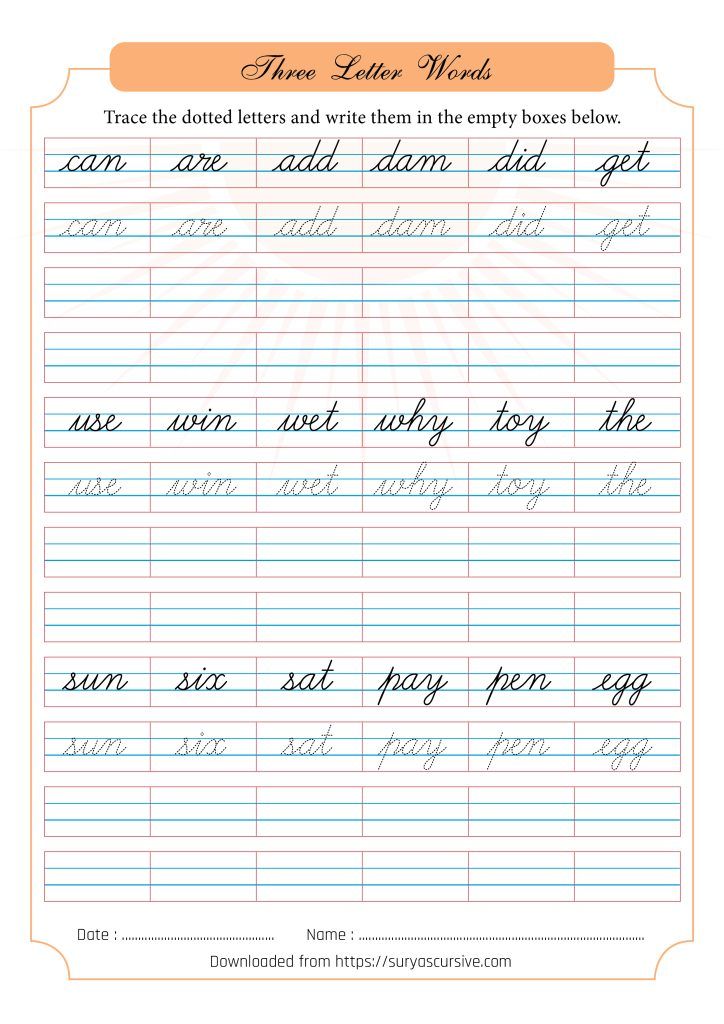
A defining characteristic of Class 3 curriculum is the introduction or consolidation of cursive writing. Worksheets at this level often feature structured tracing exercises for lowercase and uppercase letters, along with common joins. The goal is to eliminate lifting the pencil between letters, fostering a flow that increases writing speed. High-quality resources provide directional arrows and starting dots to ensure children form the loops and tails consistently, preventing the development of poor habits that are difficult to correct later.


Key Features of Effective Worksheets
Not all practice materials are created equal. The most effective Class 3 handwriting worksheets incorporate specific pedagogical elements that maximize learning. They move beyond simple line repetition to include varied activities that keep the child engaged while reinforcing muscle memory. The design should be visually clear, uncluttered, and age-appropriate to maintain a child’s interest.
- Progressive Difficulty: Starting with individual letters and moving to complex words and sentences.
- Guided Practice: Incorporating dotted lines or traceable models for independent replication.
- Contextual Writing: Encouraging writing short paragraphs or stories to apply skills practically.
- Spacing and Alignment: Exercises that teach the use of finger spaces and alignment to margins.
Supplementary Learning Strategies
While worksheets are a cornerstone of practice, their effectiveness is amplified when combined with multi-sensory learning techniques. Educators and parents can enhance the experience suggested by the worksheet by incorporating physical activities. For instance, having children form letters with their fingers in sand or using air writing to trace large movements engages different senses. This multi-modal approach caters to diverse learning styles, ensuring that the abstract concept of letter formation becomes a tangible, physical skill.


Assessing Progress
To determine the utility of a handwriting worksheet, one must look for built-in assessment tools. Effective worksheets often include a section for self-evaluation or a simple rubric. Children should be encouraged to check their own work against a model, focusing on letter formation, slant, and spacing. This metacognitive practice—thinking about their thinking—is what transforms passive copying into active learning, leading to long-term retention and automaticity.
Integration into Daily Routines
Consistency is the secret to mastering handwriting, and Class 3 worksheets are most powerful when used regularly rather than sporadically. Allocating just 15 to 20 minutes per day focused solely on these exercises yields better results than infrequent, hour-long sessions. Teachers can utilize them for morning work or dedicated literacy centers, while parents can integrate them into a calm evening routine. The short, focused nature of the practice ensures it remains a manageable and non-daunting task for the child.
Ultimately, the investment in quality Class 3 handwriting worksheets yields dividends far beyond the classroom. The discipline and focus cultivated through this practice contribute to a child’s overall academic confidence. By providing the right tools and guidance, adults equip children with the timeless skill of beautiful, legible handwriting, ensuring their ideas are always presented clearly.




Related Articles

Free Handwriting Worksheets for Older Students: Improve Cursive & Print Skills
As students advance through the elementary grades, the focus on foundational handwriting skills often shifts toward standardized testing and keyboarding...
Free Cursive Handwriting Practice Worksheets Download – Improve Your Writing Today
For educators and parents navigating the digital age, the timeless skill of handwriting remains a crucial developmental milestone. Cursive handwriting practice...

Joined Up Handwriting Practice Worksheets: Improve Cursive Writing Skills
For parents and educators navigating the early stages of literacy development, the humble joined up handwriting practice worksheet remains a cornerstone...

Free Cursive Handwriting Worksheets for Adults – Improve Your Writing Today
For many adults, the sight of a cursive signature evokes a sense of nostalgia and personal identity. In an age dominated by uniform fonts and touchscreens, the...

Free Handwriting Worksheets for 2nd Grade: Improve Cursive & Printing Skills
Second grade marks a pivotal shift in a child’s academic journey, particularly when it comes to mastering foundational literacy skills. During this year...
Free Handwriting Worksheets 2nd Grade: Improve Cursive & Print Skills Fast
Finding effective and engaging practice materials for a second grader can feel like a constant search, especially when you want resources that are both...