Chinese Numbers 1-10 Tracing: Fun Worksheets for Kids
Mastering the foundational elements of a language often begins with the most basic building blocks, and for Chinese, this means understanding the core numerical symbols. The ability to recognize, write, and pronounce Chinese numbers 1 through 10 is an essential first step for anyone embarking on the journey of learning Mandarin. This fundamental skill unlocks the door to everything from simple counting and price negotiations to telling time and understanding dates, making it a critical component of early language acquisition.
The structure of Chinese numerals is remarkably logical compared to their English counterparts, which often makes them easier to grasp for new learners. Each character is a unique symbol that represents a specific quantity, and unlike systems that rely on complex place values or alphabetic combinations, these characters stand alone. Learning to trace these characters is not just about memorization; it is about understanding the stroke order and the balance of the radicals that form the number. This physical act of writing reinforces muscle memory and significantly improves character recognition, bridging the gap between reading and writing.
Breaking Down the Symbols: Numbers 1 to 5
The initial set of numbers provides the foundation for the entire numerical system. These characters are visually distinct and relatively simple, making them the perfect starting point for tracing practice. The logic behind them is intuitive, often resembling the quantity they represent or being derived from a simple horizontal stroke. Starting with these numbers allows learners to build confidence and establish proper writing habits before moving to more complex figures.


Tracing the Fundamentals
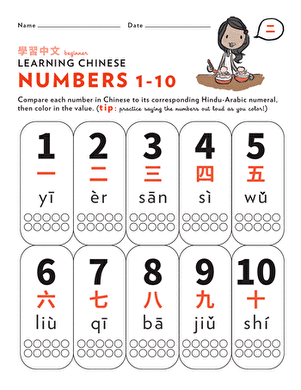
- 一 (yī) - One: The simplest of all, this character is literally a single horizontal stroke. It embodies the concept of unity and serves as the base for understanding other numbers.
- 二 (èr) - Two: This character is a straightforward reflection of its meaning, composed of two horizontal strokes. It is an excellent exercise for practicing consistent spacing and line length.
- 三 (sān) - Three: Following the pattern, this number features three horizontal strokes. Tracing '三' helps solidify the concept of adding strokes to increase value.
- 四 (sì) - Four: This character introduces a slight complexity with its top horizontal line, which is typically shorter than the vertical and bottom strokes. It is a crucial step in moving beyond simple repetitive strokes.
- 五 (wǔ) - Five: Often described as a depiction of a scissor or cross shape, this character breaks the linear pattern of the first four. Mastering its unique structure is a significant milestone in tracing proficiency.
Advancing to Double Digits: Numbers 6 to 10
The second half of this primary numerical range introduces more intricate forms and combinations. While numbers six through ten are distinct characters, they often utilize the radical of '一' (one) as a component. Understanding how these symbols are constructed not only aids in tracing but also provides insight into how larger numbers are formed in the Chinese system, where combinations of characters create values in the tens, hundreds, and beyond.
The Stroke Order Advantage
When engaging in chinese numbers 1 10 tracing, adhering to the correct stroke order is paramount. This systematic approach dictates the sequence of drawing each line, from top to bottom and left to right. Following this method ensures that the character is written efficiently and, more importantly, looks balanced and authentic. It establishes a discipline that is transferable to all future character learning, making the writing process fluid and natural rather than a series of hesitant, disconnected strokes.


- 六 (liù) - Six: This character is composed of a 'roof' radical (穴) above the horizontal line for 'one' (一). Tracing it teaches the structure of combining elements to form new meanings.
- 七 (qī) - Seven: A vertical stroke crossed by a horizontal line at the top. It is important to note the stroke order, as the crossbar is drawn last, a convention that differs from some other languages.
- 八 (bā) - Eight: Resembling a propeller or the infinity symbol, this character is written with two strokes that curve outward. It is a perfect example of a symbol that looks nothing like its numerical value but is easy to remember due to its shape.
- 九 (jiǔ) - Nine: This character looks like a curved line connecting to a vertical stroke at the top. Its shape is elegant and flowing, requiring smooth, continuous strokes during the tracing process.
- 十 (shí) - Ten: A simple vertical line intersected by a horizontal line at its center. It is a powerful character, as it also means 'full' or 'complete,' and forms the basis for the number system in the tens place (e.g., 二十 for twenty).
Practical Applications and Long-Term Benefits
The value of learning to trace these numbers extends far beyond the immediate task of counting. It serves as a gateway to understanding the Chinese language's visual logic. Once these ten characters are committed to memory and muscle memory is established, learners find it significantly easier to tackle more complex characters. Many advanced characters incorporate components of these numerical symbols, meaning that the effort invested in tracing pays dividends throughout the entire learning journey. Furthermore, this skill is immediately applicable in real-world scenarios, such as checking into a hotel, ordering food, or confirming a phone number, providing a tangible sense of achievement early in the learning process.
For educators and parents guiding children through this process, incorporating these tracing exercises can be a highly effective method. The combination of visual recognition, physical writing, and verbal pronunciation creates a multi-sensory learning experience that cheniques these numbers deeply into the learner's mind. Whether using printable worksheets or a simple lined board, the practice of chinese numbers 1 10 tracing is a timeless and proven strategy for building a strong and confident foundation in Mandarin.



Related Articles

Free Tracing Numbers 1-10: Printable Worksheets for Kids
Understanding how to trace items efficiently is a cornerstone of modern logistics and personal organization. The concept of a free tracing number, particularly...
Trace and Write Numbers 1-10 Worksheets: Free Printable Practice for Kids
Mastering the fundamentals of mathematics begins with understanding quantity and symbol association, a skill honed through consistent practice with tracing and...

Printable Tracing Numbers 1-10: Fun Worksheets for Kids
Printable tracing numbers 1 10 serve as a foundational tool in early childhood education, providing a tactile and visual method for young learners to grasp...

Free Printable Numbers 1-10 PDF - Tracing Worksheets for Kids
Printable numbers 1 10 PDF files provide an immediate and versatile resource for educators, parents, and professionals. These simple templates transform...
Printable Numbers Tracing 1-10: Fun Worksheets for Kids
Mastering numerical handwriting is a foundational skill for early learners, and printable numbers tracing 1 10 serves as the essential starting point. This...
Tracing Numbers 1-10 Printable Worksheets: Free PDF Practice for Kids
Tracing numbers 1 10 printable worksheets provide an essential foundation for early mathematical development. These simple yet effective tools guide young...