Big Letter H Worksheets: Tracing & Learning ABC Fun
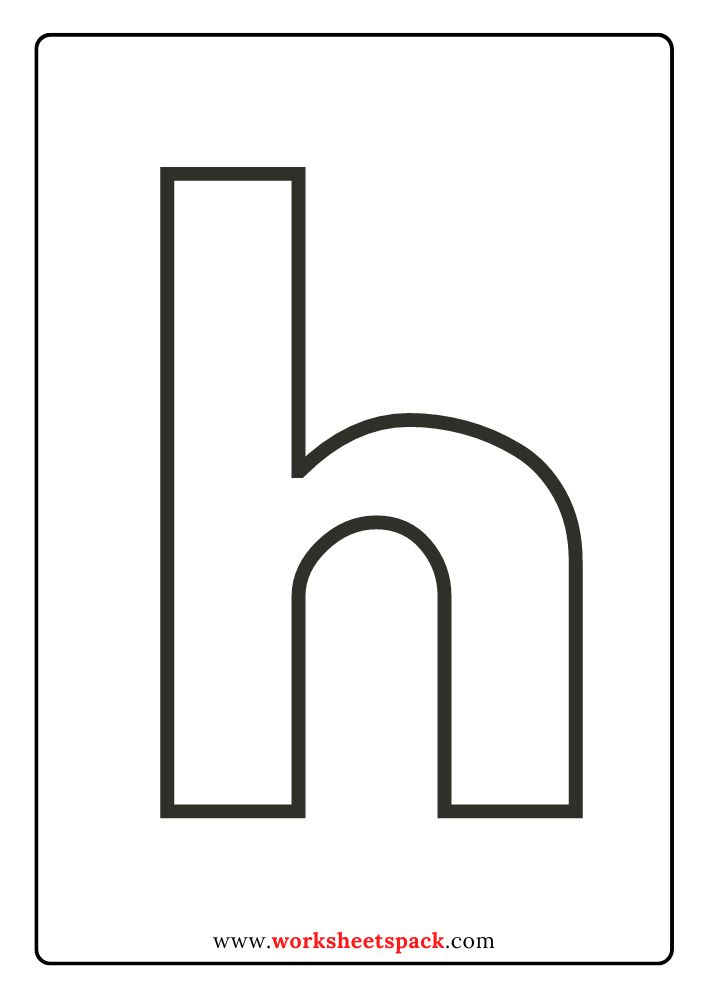
Mastering the fundamentals of written language often begins with a single, seemingly simple element: the letter. For educators, parents, and learners navigating the early stages of literacy, big letter h worksheets represent a crucial tool in building a strong foundation. These specific resources focus on the uppercase "H," providing a structured and repetitive practice that is essential for developing muscle memory and familiarizing the writer with the correct formation of this particular shape.
The Educational Value of the Uppercase H
The letter "H" is a deceptively complex character for a novice writer. It requires a combination of vertical lines and a horizontal crossbar, demanding precision in pencil control and spatial awareness. Big letter h worksheets break this complexity down into manageable steps. By isolating the letter and presenting it at a large scale, these worksheets allow a child to focus entirely on the physical mechanics of writing—the starting point, the direction of the strokes, and the precise placement of the crossbar. This focused practice is fundamental for building the confidence needed to progress to smaller, cursive styles and ultimately, fluent handwriting.
Tracing and Repetition: The Core Methodology
The most common and effective design for a big letter h worksheet is the tracing exercise. Learners are typically presented with a large, dotted outline of the letter "H" and are tasked with following the path of the dashes to form the letter themselves. This method leverages the power of muscle memory and visual guidance. The large format ensures that the movements are broad and clear, making it easier for a child to understand the sequence of strokes. Repetition is key; by tracing the letter multiple times, the brain and hand begin to synchronize, transforming a conscious, effortful task into an automatic skill.


- Visual Discrimination: Large worksheets help children distinguish the letter "H" from other similar shapes, like the letter "I" or the number "1."
- Fine Motor Skill Development: The act of holding a pencil and controlling it to stay within the lines strengthens the small muscles in the hand and fingers.
- Spatial Reasoning: Learners must understand where to place the crossbar on the vertical lines, a critical lesson in proportions and alignment.
Beyond Tracing: Advanced Applications
While tracing is the primary function, effective big letter h worksheets often incorporate additional exercises to reinforce learning and prevent monotony. A well-designed worksheet will move beyond simple tracing to include activities that promote letter recognition and sound association. For instance, after practicing the formation of the letter, a child might be asked to identify and circle all the "H"s hidden among a field of other letters. Furthermore, connecting the letter to its primary sound, as in "hat" or "horse," bridges the gap between handwriting and phonics, creating a more holistic literacy experience.
| Worksheet Feature | Purpose | Benefit for the Learner |
|---|---|---|
| Dotted Tracing Lines | Guided practice | Builds confidence and correct stroke order |
| Independent Writing Boxes | Unassisted replication | Encourages memory and self-reliance |
| Letter Identification Search | Reinforces letter shape | Improves visual scanning and discrimination |
Choosing the Right Worksheet
Not all big letter h worksheets are created equal, and selecting the appropriate one can significantly impact a child's learning experience. Look for designs with a clean, uncluttered layout that avoids visual distractions. The font used should be clear and consistent with what is taught in schools, avoiding overly stylized typefaces. Consider the physical quality of the paper as well; a slightly thicker sheet can withstand repeated use with dry-erase markers, making the worksheet a reusable resource. Ultimately, the best worksheet is one that engages the child, making the process of learning to write the letter "H" both effective and enjoyable.


In an increasingly digital world, the tactile experience of writing by hand remains profoundly important. Big letter h worksheets serve as the bridge between digital interaction and physical creation, offering a screen-free activity that builds essential cognitive and motor skills. By providing a clear, structured, and engaging path to mastery, these tools empower young learners to develop the fundamental ability to communicate through writing, one carefully formed letter at a time.




Related Articles

Fun Letter B Activity Worksheets for Toddlers: Tracing, Coloring & Learning!
Introducing the letter B through structured activity worksheets offers toddlers a multi-sensory gateway to early literacy. These targeted exercises move beyond...

Fun Letter S Worksheets for Preschoolers: Tracing, Coloring & Learning The Alphabet
Letter S worksheets for preschoolers provide a foundational tool for early literacy development. These targeted exercises help young learners recognize the...

Free Printable Tracing Worksheets for Kindergarten – Fun Learning Activities
Free printable tracing worksheets for kindergarten represent a foundational resource for early childhood education, offering a tactile and engaging way for...

Free Printable Letter C Worksheets For Kids – Fun ABC Learning
Parents and educators seeking effective resources for early literacy development often turn to free printable letter c worksheets. These tools provide a...

Letter W Tracing Worksheets for Kindergarten: Fun Writing Practice
Mastering letter formation is a foundational skill that sets the stage for confident reading and writing, and for many young learners, the journey begins with...

Free Printable Letter Identification Worksheets – Fun & Easy Learning
For educators and parents navigating the early stages of literacy development, finding efficient, high-quality resources is essential. A letter identification...