Black and White Alphabet Chart with Pictures: Free Printable Download
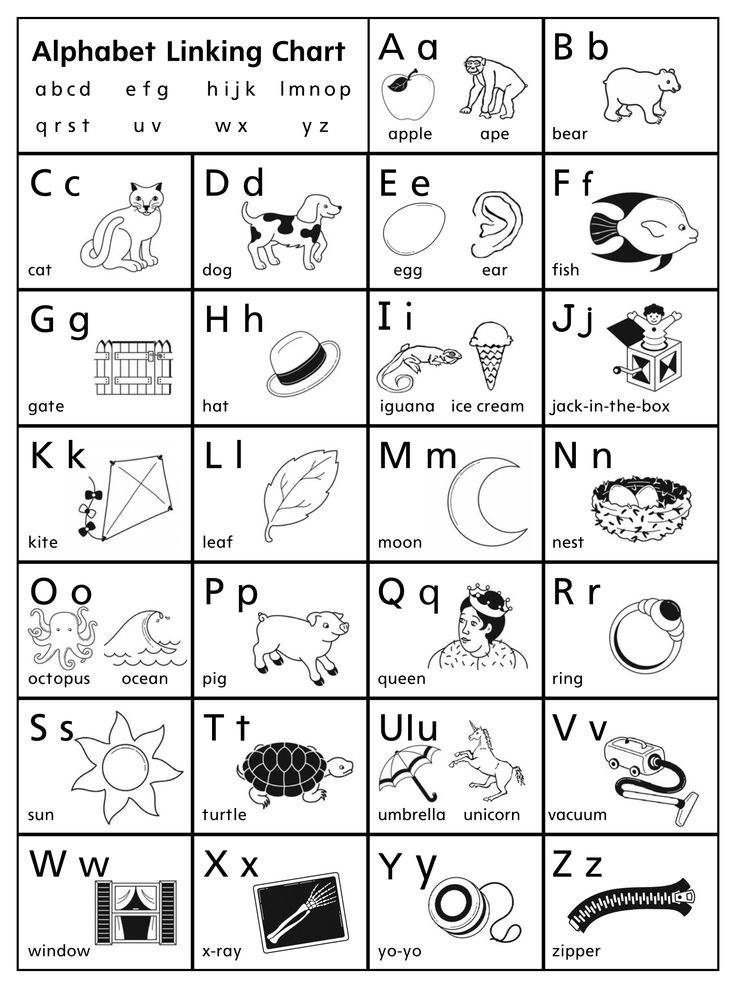
An alphabet chart with pictures black and white designs remains a foundational tool for early childhood education, offering a clean and focused way to introduce letter-sound relationships. Unlike colorful digital alternatives, these monochrome worksheets minimize visual clutter, allowing young learners to concentrate on the shape of the letter and its associated phonetic sound. This timeless resource serves as a bridge between abstract symbols and concrete objects, making the initial steps of literacy acquisition feel more tangible and less intimidating for students.
The Pedagogical Power of Simplicity
Black and white imagery leverages high contrast, which is easier for developing eyes to process compared to complex color gradients. This simplicity reduces cognitive load, enabling children to focus entirely on letter recognition and phonemic awareness. When a worksheet features a bold letter "A" accompanied by a simple outline of an apple, the brain makes the connection between the symbol and the sound without the distraction of hue or saturation. This streamlined approach is particularly beneficial for children with sensory sensitivities or those who require a more structured visual environment to learn effectively.
Building Vocabulary through Visual Association
Each letter on the chart typically represents a common object, transforming the learning session into a vocabulary building exercise. For the letter "B," a child might see a banana or a ball; for "R," a rabbit or a rose provides a visual anchor. This method aligns with the science of reading instruction, which emphasizes the importance of connecting phonemes (sounds) with graphemes (letters) and meaningful concepts. By consistently pairing the abstract curve of a "D" with the image of a dog, educators reinforce memory retention through dual-coding theory, where verbal and visual information are stored together.


Versatility in Learning Environments
The flexibility of an alphabet chart with pictures black and white format is one of its greatest assets. These charts function seamlessly across various settings, from traditional classrooms and homeschooling desks to travel activities and tutoring sessions. Teachers can easily print multiple copies for group activities, allowing students to color the images themselves as a reward or fine-motor skill exercise. Parents working with their children at home can utilize these sheets for nightly practice, turning drill-and-kill exercises into engaging hunts for the letter "S" and the picture of the snake it represents.
- Utilize as flashcards for one-on-one review sessions.
- Display on classroom walls as a constant visual reference.
- Cut out the images for hands-on sorting and matching games.
- Use as tracing worksheets for pre-writing skill development.
- Integrate into sensory bins filled with rice or beans for tactile discovery.
- Employ as coloring sheets to reinforce letter shape memory.
Customization and Accessibility
One of the most significant advantages of digital black and white charts is the ease of customization. Educators can select specific letters a student is struggling with—such as "P" and "B" or "D" and "Q"—and create targeted practice pages without overwhelming the child. Furthermore, this format supports accessibility initiatives; by avoiding color-coding, the charts remain usable for students with color vision deficiency. The lack of color also ensures that the resources are printer-friendly, reducing ink costs and environmental impact while maintaining the educational integrity of the material.


Supporting Different Learning Styles
Visual learners benefit from seeing the distinct shape of the letter, while auditory learners connect the image with the sound the letter makes. Kinesthetic learners often engage deeper when the chart is paired with movement, such as tracing the letter in the air or using playdough to form the shape based on the picture prompt. An alphabet chart with pictures black and white acts as a versatile canvas that accommodates multiple modalities, ensuring that the lesson meets the student where they are rather than forcing the student to adapt to a one-size-fits-all approach.
Implementation Strategies for Maximum Impact
To maximize the effectiveness of these charts, introduction should be systematic and engaging. Start with the child’s name or high-frequency letters to build immediate relevance. Encourage storytelling around the images, asking the child to describe the picture or create a sentence using the letter sound. Consistent, short interactions yield better results than lengthy, forced sessions. By treating the black and white page not as a sterile drill sheet, but as a springboard for conversation and exploration, the adult transforms a simple chart into a dynamic engine for literacy development.


Related Articles

Free Printable Alphabet Letters with Pictures - A to Z Chart
Finding high-quality, ready-to-use resources for teaching the alphabet can be a challenge for parents and educators. Free printable letters of the alphabet...

Printable Alphabet Chart with Pictures: Fun Learning for Kids
An effective printable alphabet chart with pictures serves as a foundational resource for early literacy, transforming abstract letters into tangible...

Free Printable Individual Alphabet Letters – Instant Download for Crafts & Learning
Free printable individual alphabet letters have become an essential resource for educators, parents, and crafters looking to enhance early literacy skills and...

Free Printable Fabric Alphabet Letters Pattern Download
For parents, educators, and creative hobbyists, the demand for accessible and versatile learning tools is constant. Free printable fabric alphabet letters...

Free Printable Nature Pictures: Stunning Scenes To Download
Printable pictures nature offers a simple yet profound way to bring the serenity of the outdoors into any indoor space. Instead of relying on generic stock...

Free Printable Multiplication Chart – Instant Download & Math Mastery
Mastering multiplication is a pivotal milestone in a child's mathematical journey, transforming complex calculations into manageable tasks. A multiplication...